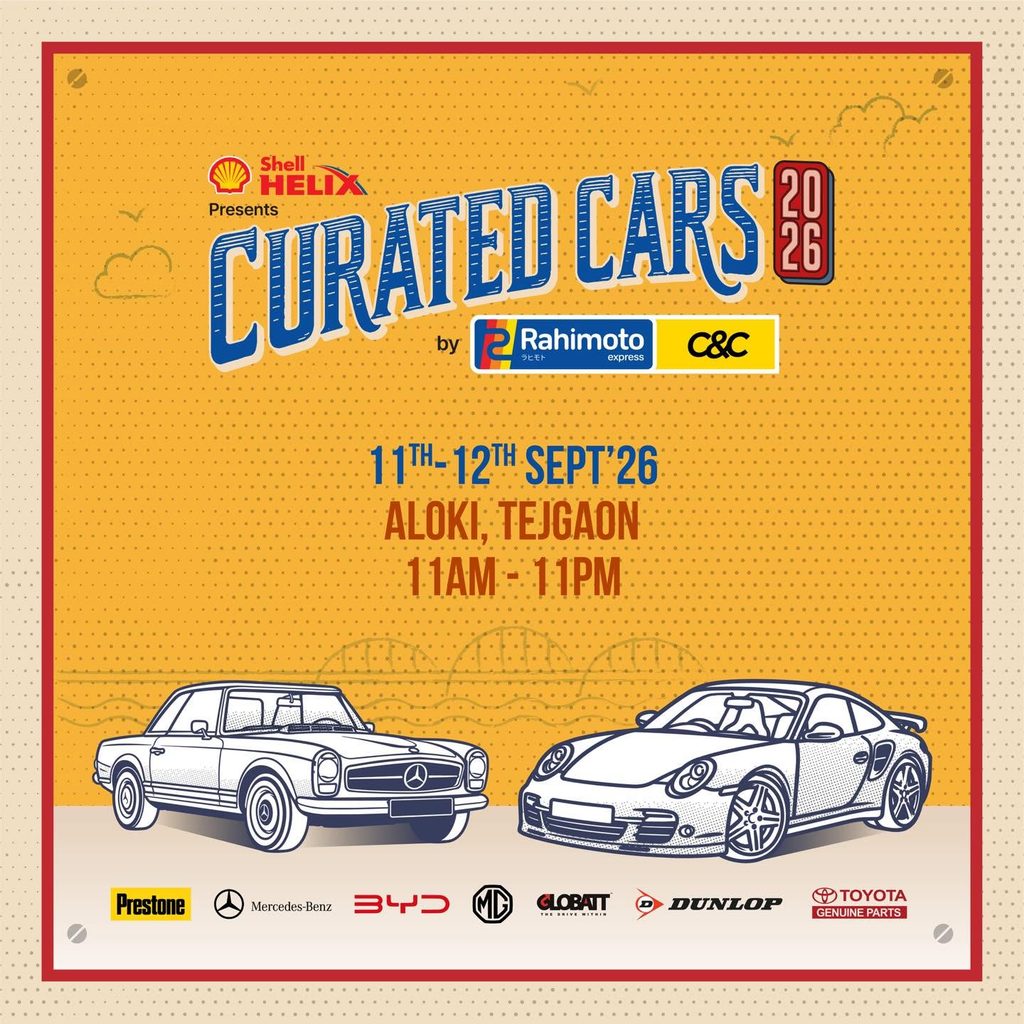
Two years in, Waiz Rahim and Mustavi Irtiza Basher have turned Curated Cars from a one-off gamble into something Dhaka’s car scene actually looks forward to. Here’s what was really behind it.
Most car meets in Dhaka are ad hoc and lack polish: owners bring their cars park them randomly, hope the crowds care more about the cars than about filming themselves next to it. Loud, chaotic, and rarely built for anyone who isn’t already an enthusiast.
Curated Cars was built to break that mould, and by year two it had earned the right to. Behind the scenes, though, the show that looked effortless from the floor very nearly wasn’t. Co-organiser Mustavi Irtiza Basher didn’t hide how close the whole thing came to falling apart — starting with the entrance itself, where a G580 had been squeezed into what he called the show’s “impossible parking,” a fitting mascot for a weekend run on almost no margin at all.
A carefully curated display
What made the first Curated Cars land wasn’t the rarity of any one car — the cars mattered, sure, but the real draw was that the whole thing was actually well organised and properly curated for once. That mattered more than any headline car, because it changed who felt comfortable showing up: not just diehards who know every chassis code, but partners, kids, and curious neighbours who’d never normally give a car show a second look.
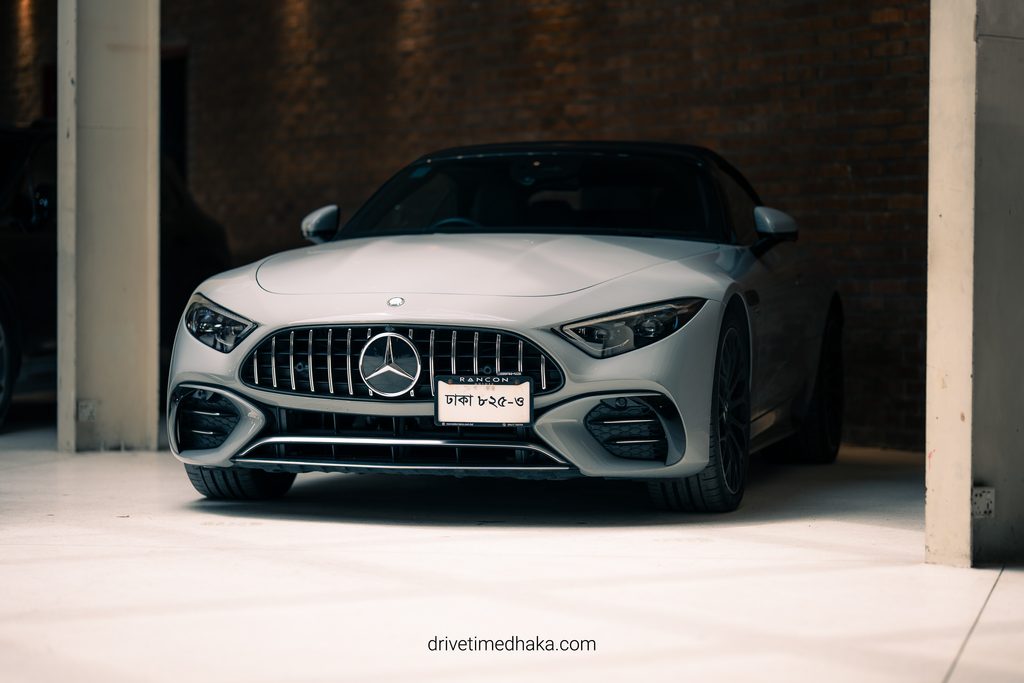
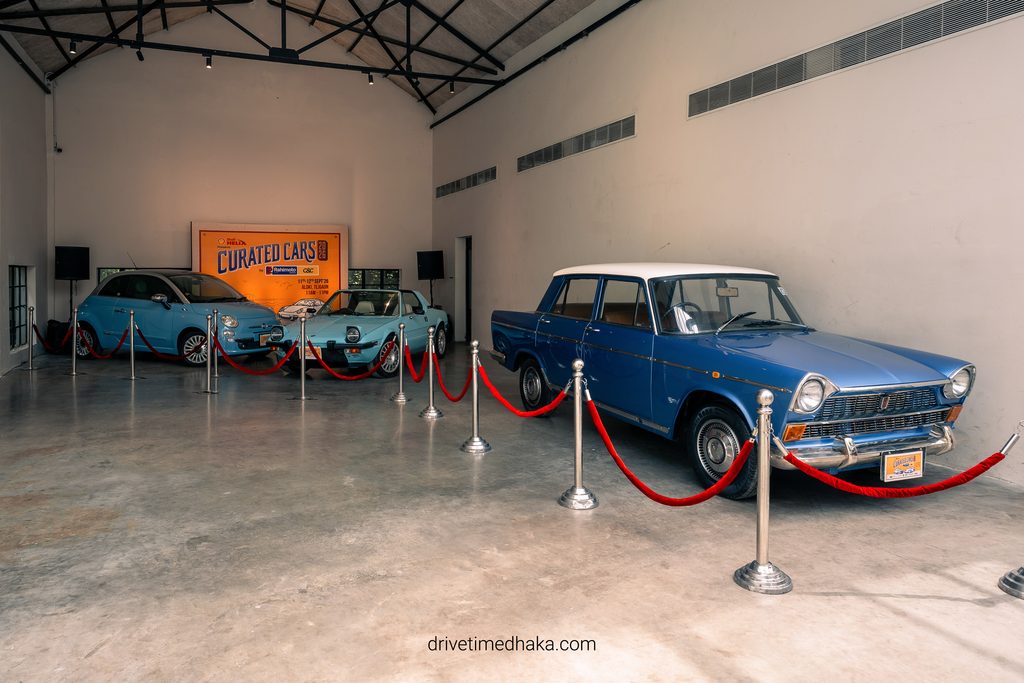
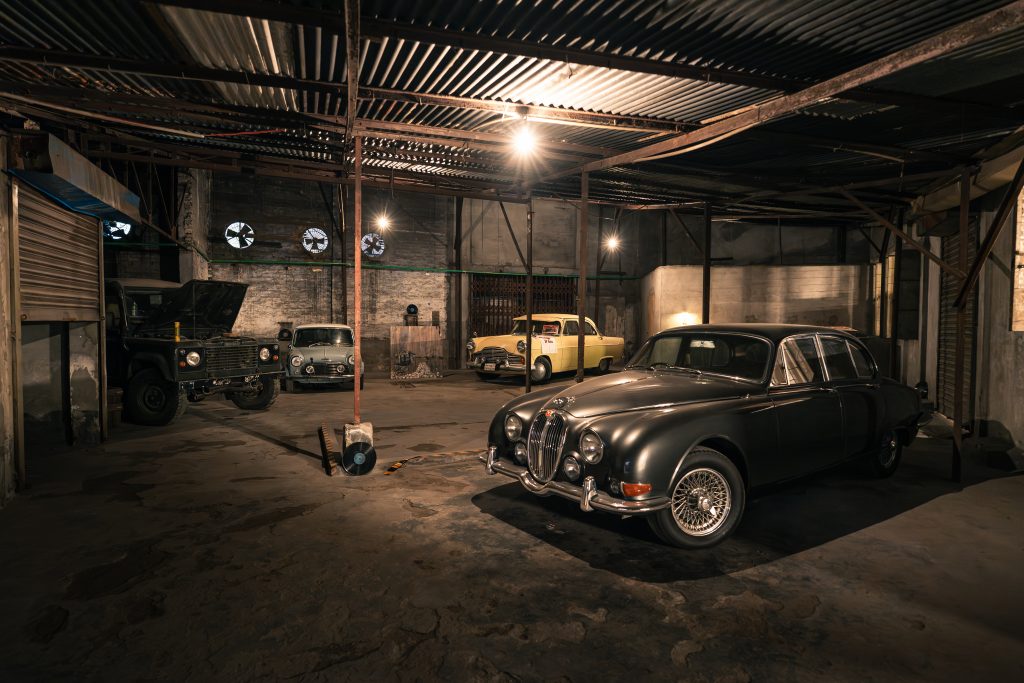
Year two kept that discipline, and the hall backed it up with genuine range. English motoring history held one corner — an MGB alongside the current MG line-up — before giving way to a Volkswagen camper bus and a Fiat corner built around an X1/9 and a 500. American muscle got its own stretch, a Cadillac V8 sat beside a new-shape Mustang, while a beautifully restored Land Cruiser BJ40 (featured previously on drivetimedhaka) and a heavily reworked, all-wheel-drive-converted Corolla GT project — a car that’s reportedly picked up a few hundred thousand views online on its own — pulled the floor somewhere rarer entirely. A tuned Toyota GR and a tasteful Mercedes W123 build from Musa Khan (feature coming soon) rounded out a corner that had clearly been assembled car by car,.
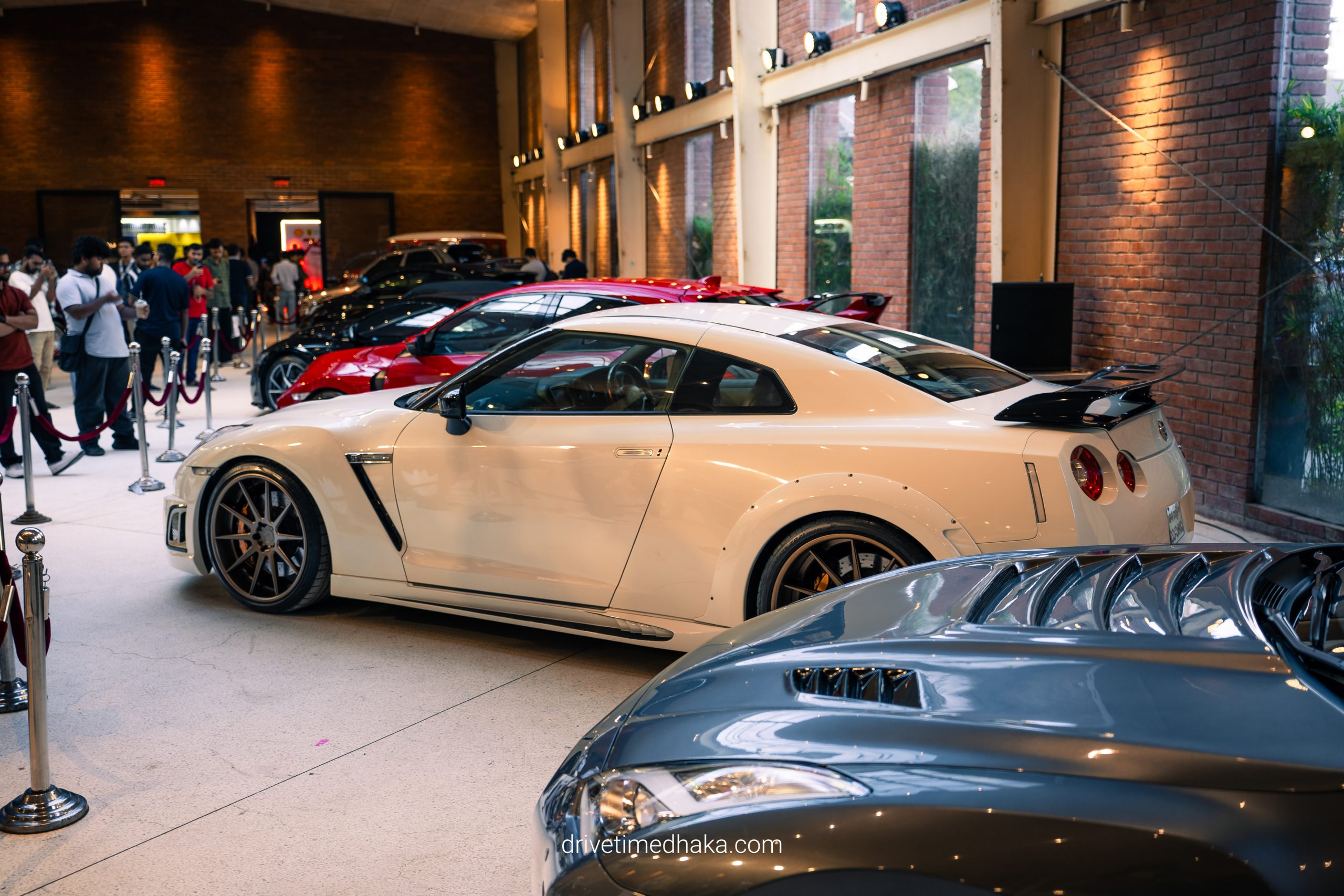
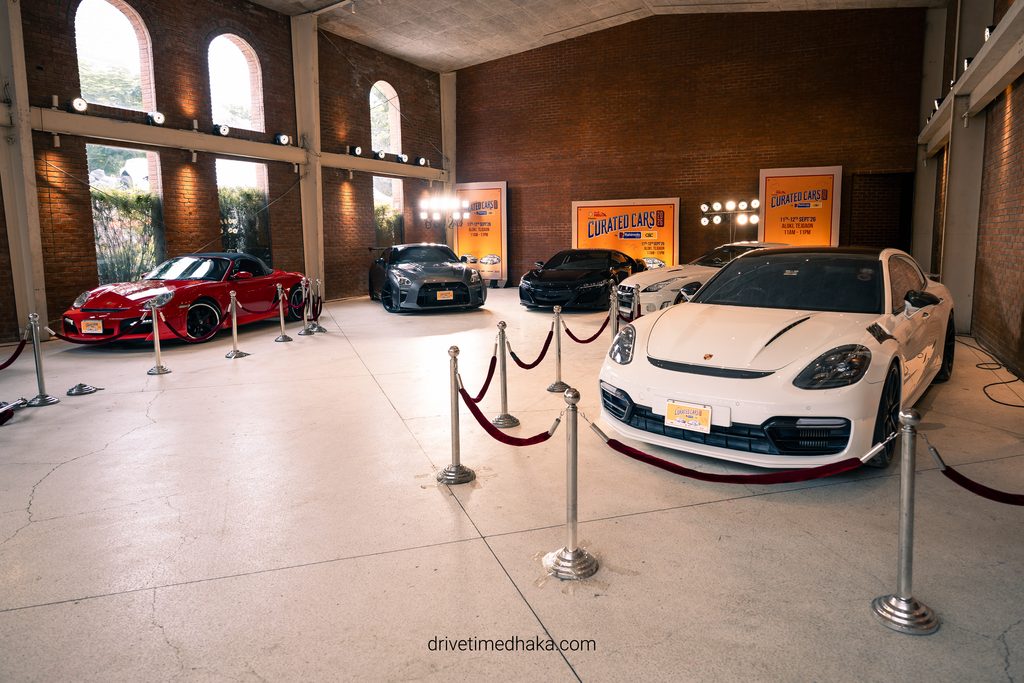
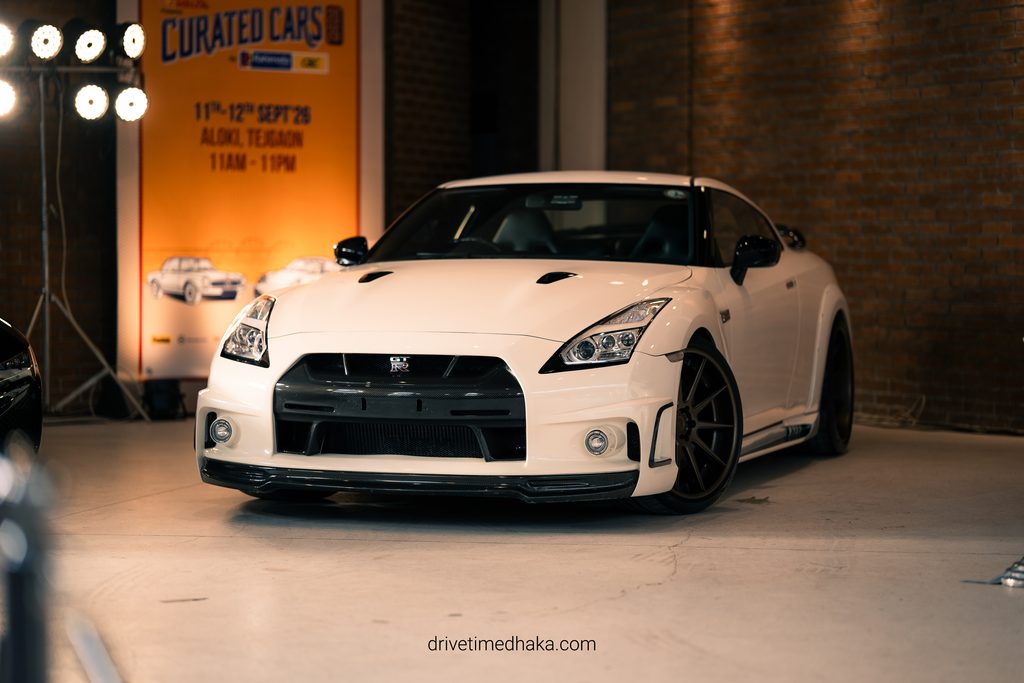
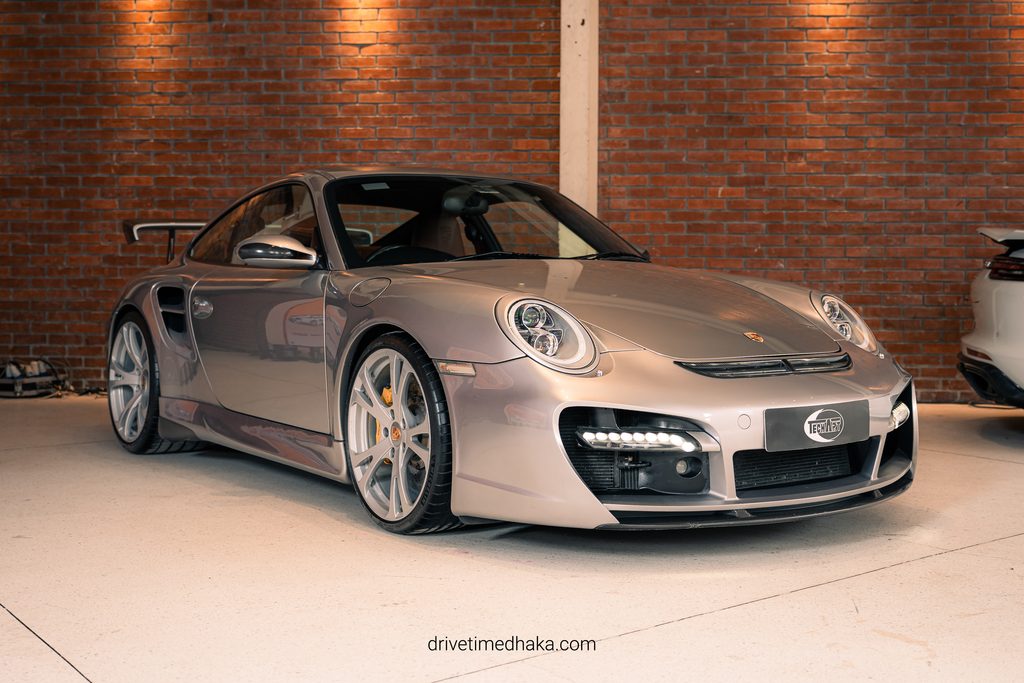
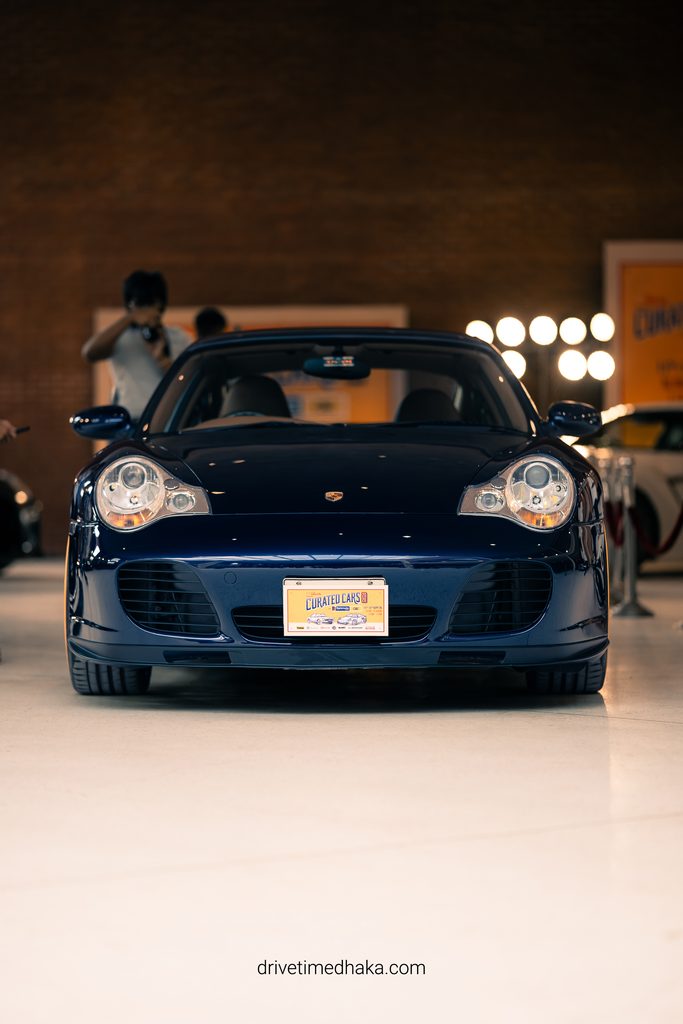
The Porsche row read like the emotional centre of the show for anyone who grew up around this scene — a 996-era 911 Turbo and a heavily modified Tech Art 997 911 Turbo , both with their own stories to tell along with a rare latest gen Cayenne Turbo, and a first-generation Boxster that was originally sold by the official Porsche dealership in Dhaka back in 2005, a Panamera Turbo S rounded out the Porsche section. The JDM wall carried its own weight — two Skyline GT-Rs parked side by side, along with two rare Hondas – an NSX and a heavily modified FK8 Civic Type R in the country sat next to an iconic Honda S2000.
More Than a Show — a Meeting Point
Ask anyone in Dhaka’s car scene and they’ll tell you the cars were never really the point. They’re the excuse. The real value is what happens around them — a mechanic meeting a collector, a teenager getting close enough to a GT-R or a decades-old classic to actually study it, instead of watching it blur past on Gulshan Avenue. Sponsors and dealers were welcomed but kept in their lane — present enough to keep the lights on, restrained enough that the show never turned into a showroom. The owners who obsess over these cars stayed the centre of gravity, and a proper layout drew a crowd that was there for the community, not just to be seen.
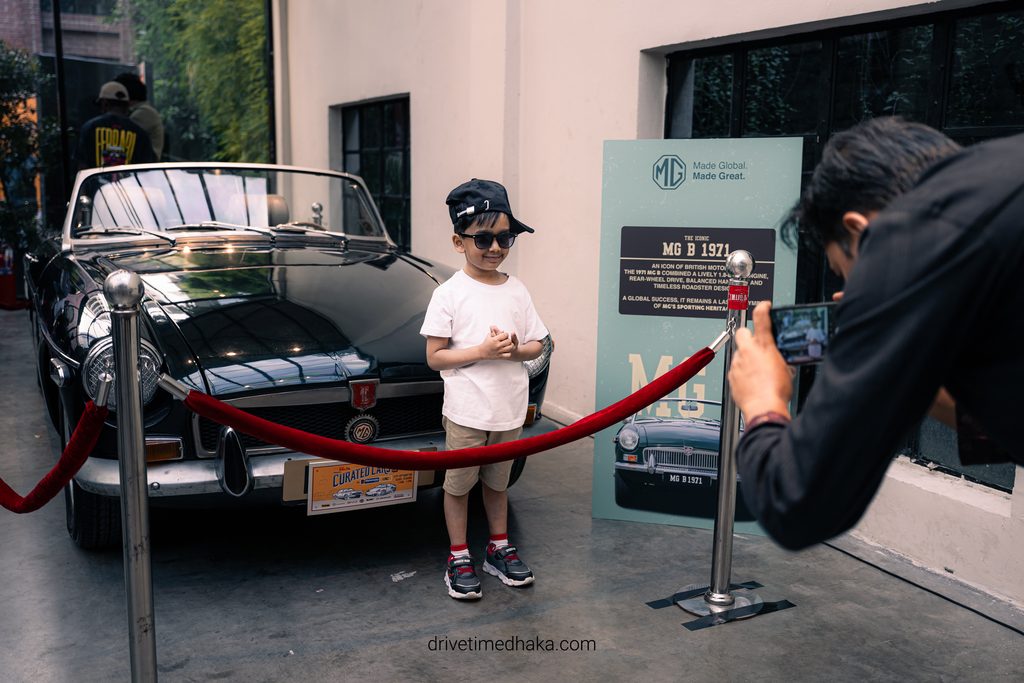
That’s also where the show does its quietest, most important work: giving the next generation an actual entry point. Dhaka’s car culture has plenty of noise from the same committed core, but not enough rooms where a kid can walk right up to a car without being shoved aside, or slow down enough to ask an owner a question instead of just filming and moving on. That’s where curiosity turns into obsession — quieter than a burnout for the crowd, but what actually grows the scene a decade from now.
The Part That Almost Didn’t Happen
None of this was easy to pull off. Co-organisers Waiz Rahim and Mustavi Irtiza Basher worked tirelessly to make the show happen — managing the operations and logistics, and scrambling to cover for late drop-outs along the way. By any reasonable measure, that shouldn’t produce a functioning event, let alone one with this much range on the floor. That it did says as much about the trust this community has built with its organisers as anything parked inside the hall.
It’s also a fitting stand-in for what running a car scene in this city costs in general. Cars here fight the climate, patchy fuel, a regulatory system that turns ownership into an ordeal, and roads never built for anything low or precious. Every car in that hall represents an owner who chose to deal with all of that anyway — which is exactly why a show that treats those cars, and the people behind them, with real care resonates the way it does.
Two editions in, and already the scene is asking the same question out loud: same time, same place, next year? If Curated Cars keeps this up, it won’t be a question for much longer.
Photo credits: Event photography by thatcarphotoguy for drivetimedhaka. Additional detail from a closing-day walkthrough video by Mustavi Irtiza Basher.
Leave a Reply