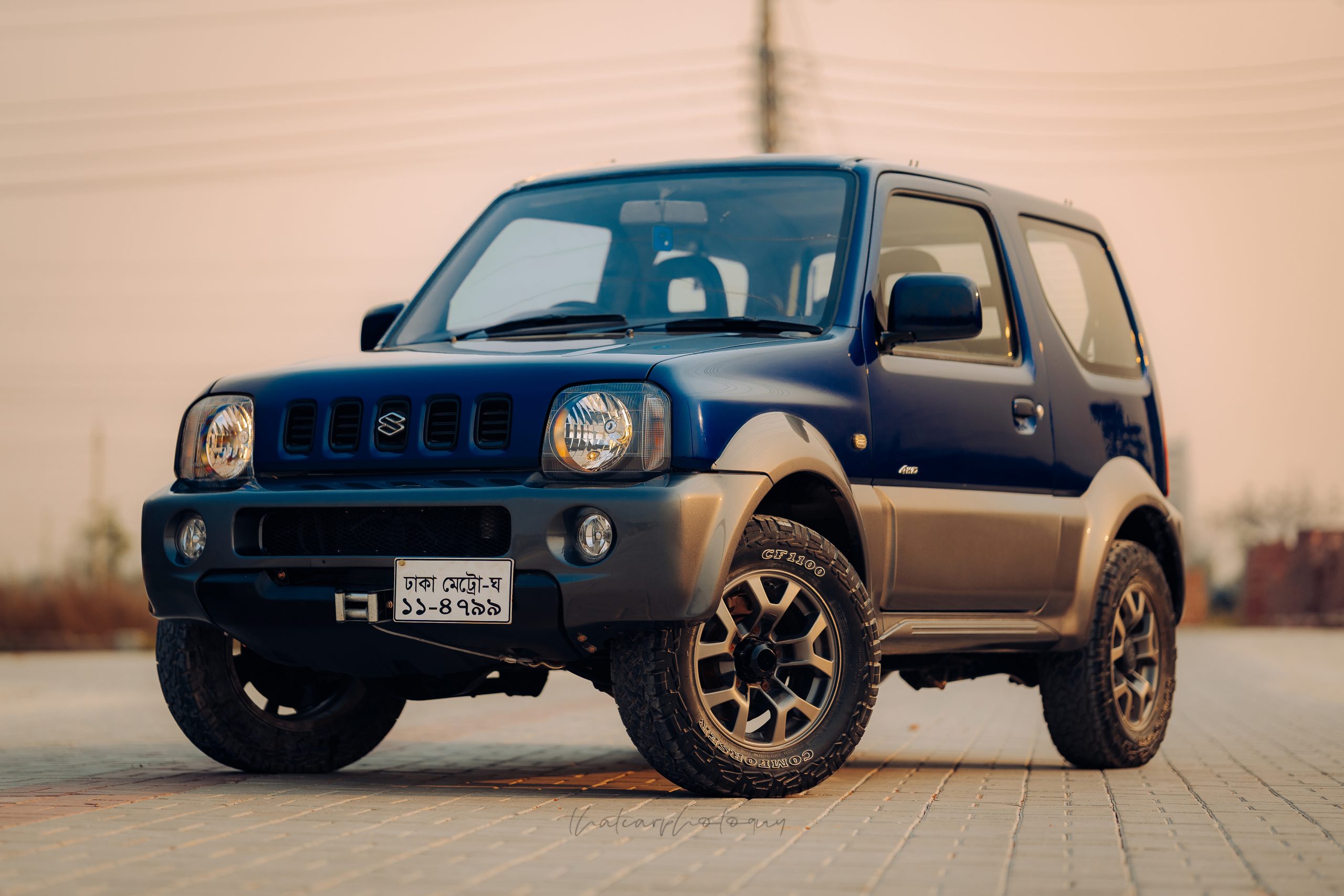
Author: drivetimedhaka

  • Resurrecting a 2003 Suzuki Jimny – from Government Service to Everyday Explorer

    Resurrecting a 2003 Suzuki Jimny – from Government Service to Everyday Explorer

    There is something deeply honest about a Jimny.

    No pretence. No unnecessary bulk. Just a ladder frame, a small-capacity petrol engine, and the quiet confidence of a proper 4×4 system. Around the world, the Suzuki Jimny enjoys cult status — from Japanese mountain roads to Australian cattle farms and European green lanes. In Bangladesh, however, most live hard lives. This one may have lived the hardest of all.

    A Life in Public Service

    This 2003 JB43 — powered by Suzuki’s dependable 1.3-litre engine — began its life not as a lifestyle accessory but as a government workhorse. It served under the Government of Bangladesh in the Ministry of Health pool fleet.

    For years, it travelled across the country — city traffic, rural clinics, pot holed backroads — carrying officials, files, and responsibility. It was never pampered. It was used.

    Like many pool cars, maintenance was functional rather than thorough. When engine issues began to surface, the decision was simple: retire it from active duty. By 2025, it was put up for sale in a government auction — tired, worn, and mechanically unwell.

    Most would have walked away.
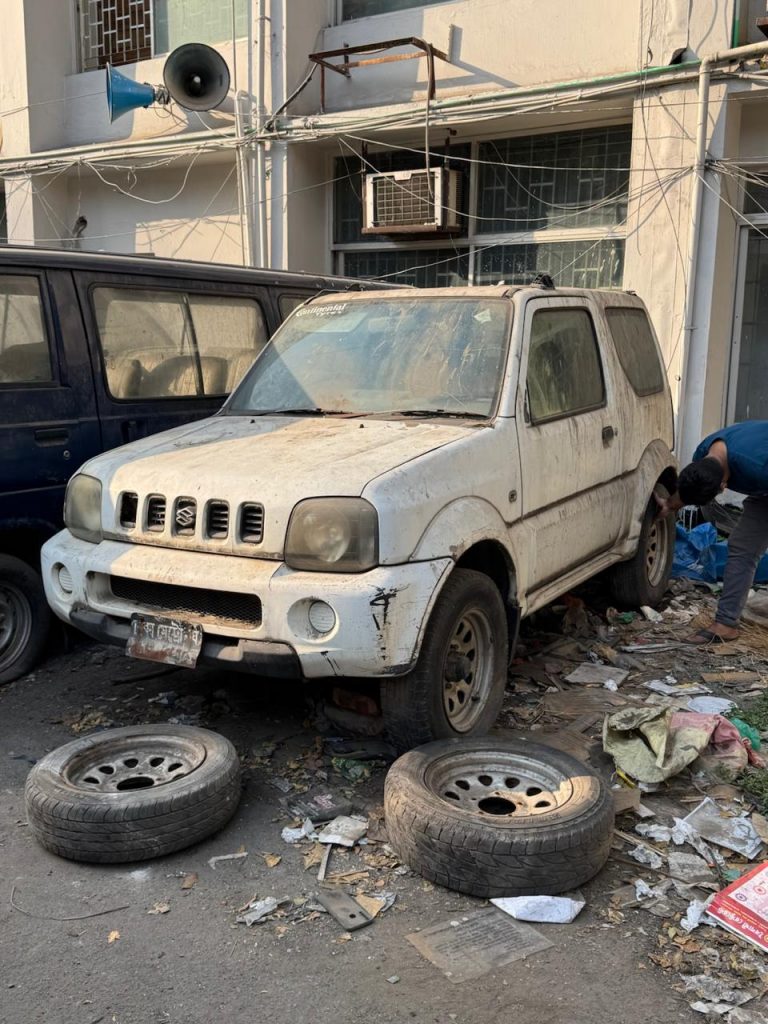
    Jimny at the Health Ministry yard

    July’ 24 Revolution — The Day It Survived

    History has strange ways of choosing its survivors.

    During the unrest of the July ’24 revolution , vehicles stored around it were burned to a crisp. Rows of metal reduced to twisted, blackened shells. Yet somehow, this tiny Jimny remained untouched. Smoke-stained, surrounded by wreckage — but alive.

    Where others saw a forgotten relic, Motorwerks saw a rough diamond.
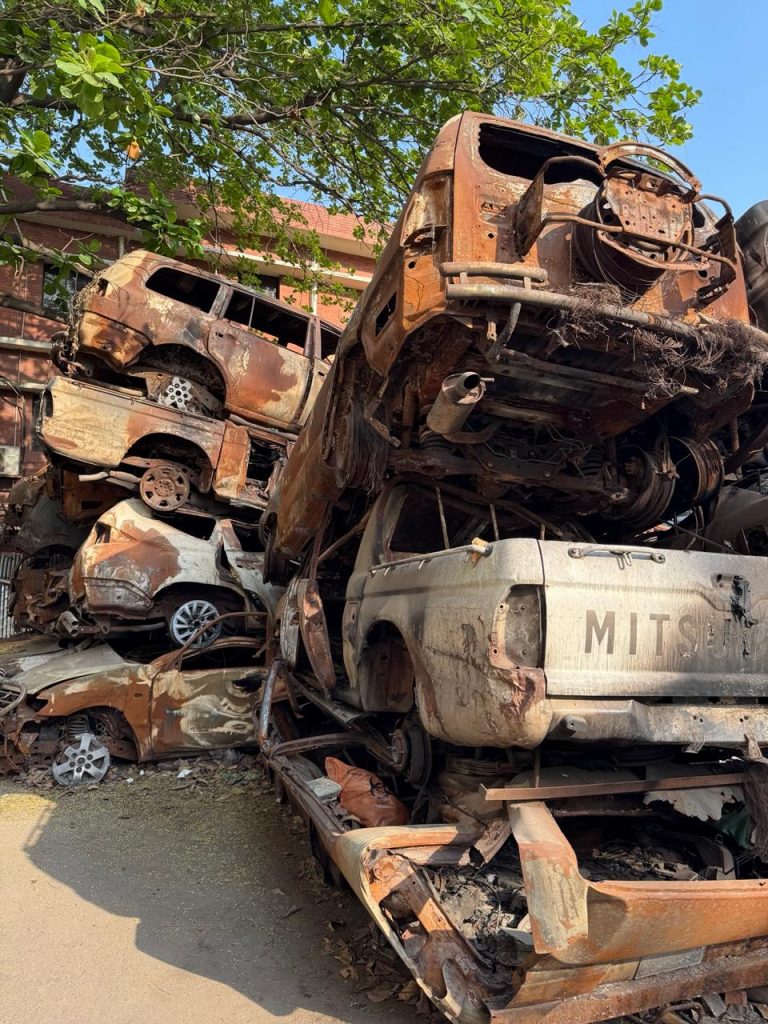
    Burnt out ex-govt pool cars

    Seeing the Potential

    The team at Motorwerks understands what enthusiasts worldwide already know: a JB43 Jimny is not disposable. Its simple mechanical architecture, ladder-frame chassis, and compact proportions make it one of the most capable small 4x4s ever built.

    This one deserved another chapter.

    But in Bangladesh, restoration is rarely straightforward. Parts are not always a click away. Sourcing takes time, relationships, and patience. This would not be a quick flip. It would be a careful rebuild.
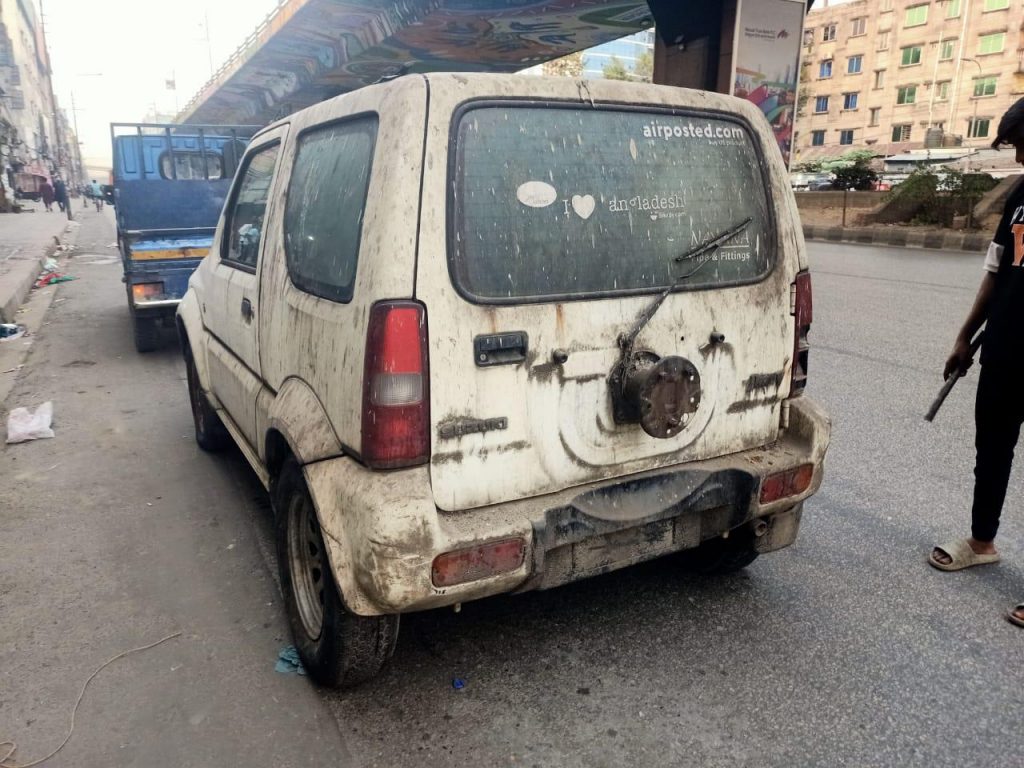
    Jimny being towed to Motorwerks

    Mechanical First — Heart Before Beauty

    Every proper restoration starts with the fundamentals.

    This Jimny came equipped with the rare JB43W 1300cc twin-cam M13A petrol engine which was completely rebuilt — stripped down, inspected, and refreshed with care. Worn internals were replaced, seals and gaskets renewed, tolerances checked and corrected. The goal wasn’t just to make it run. It was to make it dependable again. The fuel tank had accumulated years of debris and contamination — the kind of neglect that quietly compromises reliability.
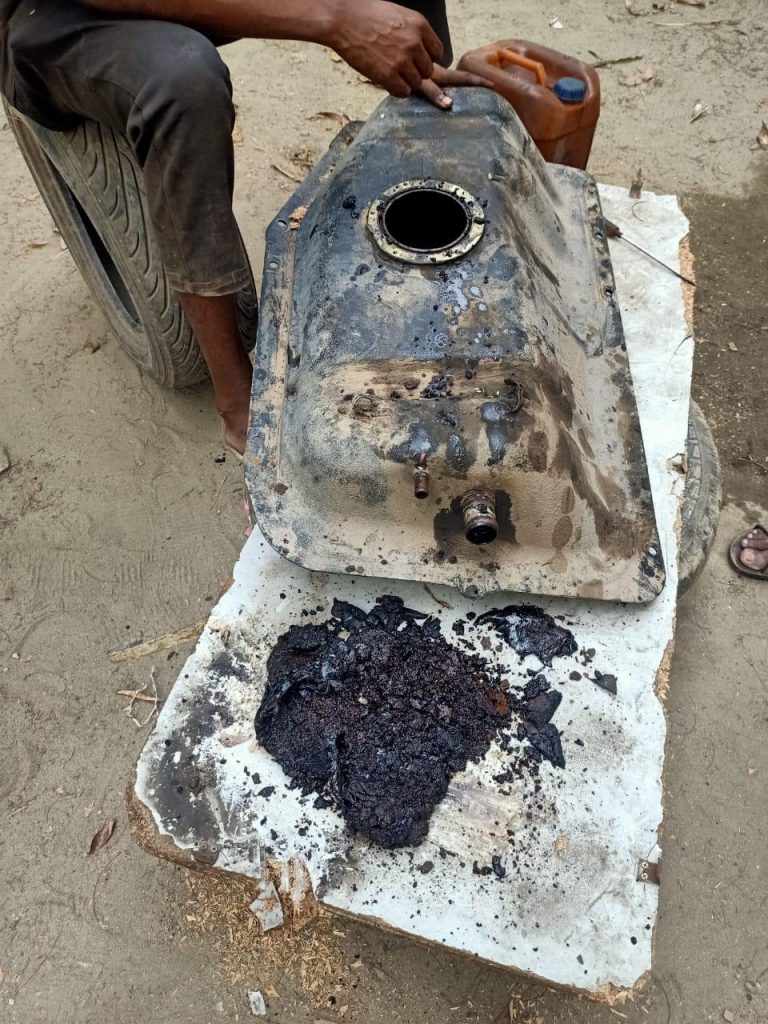
    Tar and debris cleaned from the fuel tank

    Once the engine fired up cleanly and settled into a healthy idle, the project had momentum. While the drivetrain was apart, a brand-new clutch was installed to ensure smooth power delivery. The braking system was overhauled with new brakes and lines throughout — essential for a car that would once again see real-world use. Every bushing was replaced, restoring tightness and composure to the chassis.This Jimny would not just look good — it would drive as it was meant to.
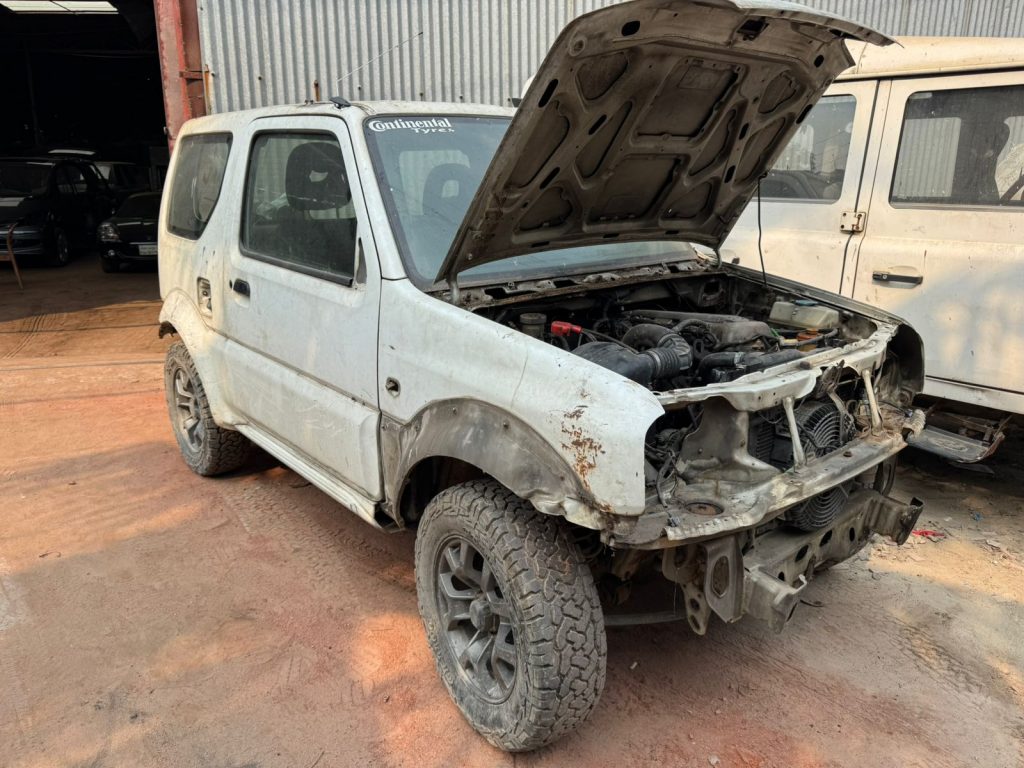
    Engine rebuild completed first

    Bodywork: OEM+ Done Right

    Years of government duty had left their marks. Dents, tired paint, and surface fatigue told its story. The Motorwerks paint team stripped the body back and began the slow process of restoration.

    The brief was clear: OEM+.

    Not flashy. Not overbuilt. Respect the car’s original character — elevate it subtly.
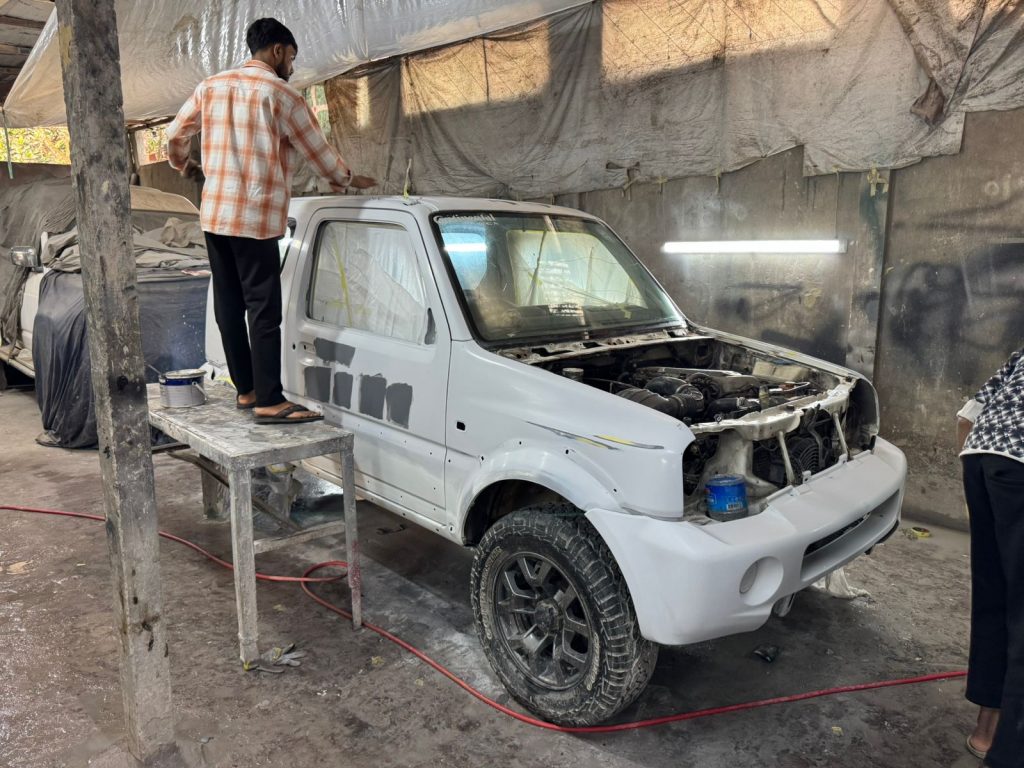
    At the bodyshop

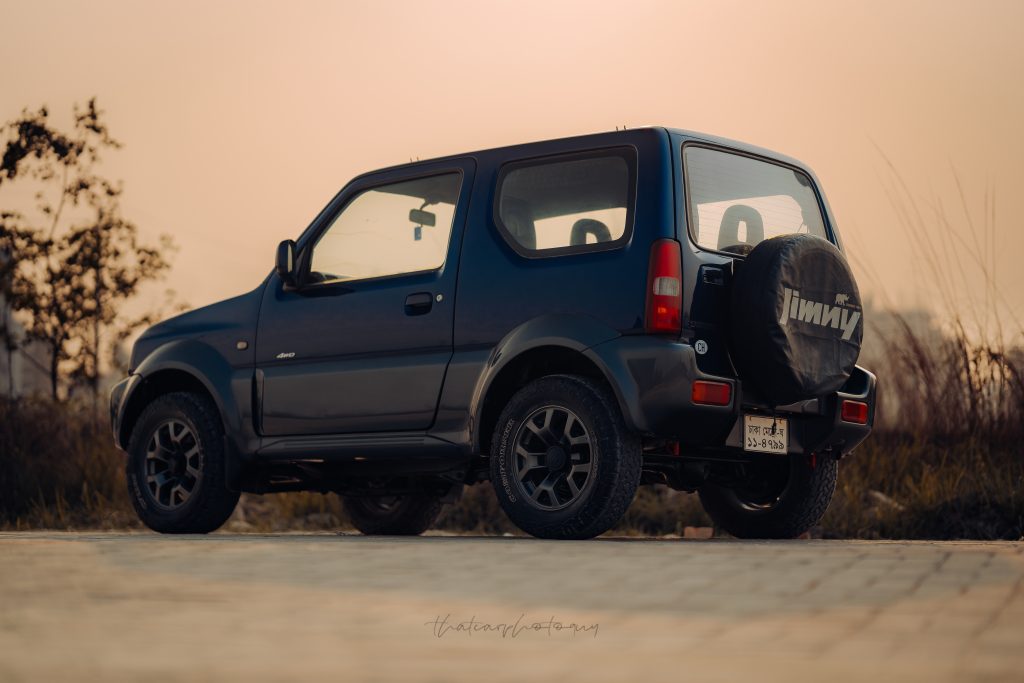
    The chosen finish was Gentian Blue, a shade borrowed from Porsche 911 palettes, paired with Toyota’s Magnetic Grey as a contrasting lower tone. The two-tone treatment transformed the car while remaining tasteful.
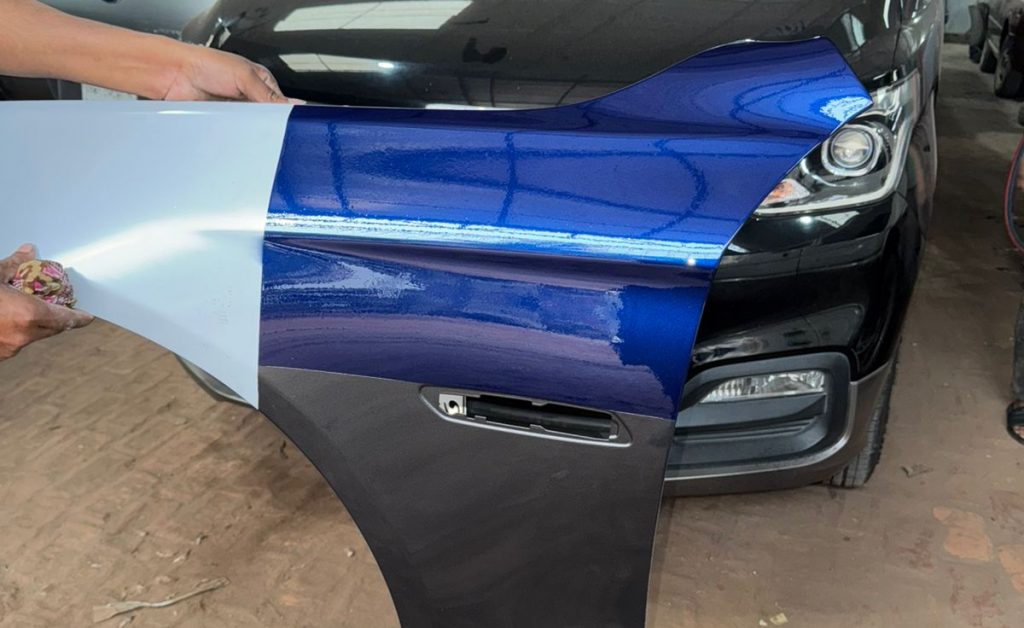
    Paint samples

    The result is striking but mature. It looks factory — if the factory had better taste.

    The Details That Matter

    As with any rebuild, the small victories define the journey.

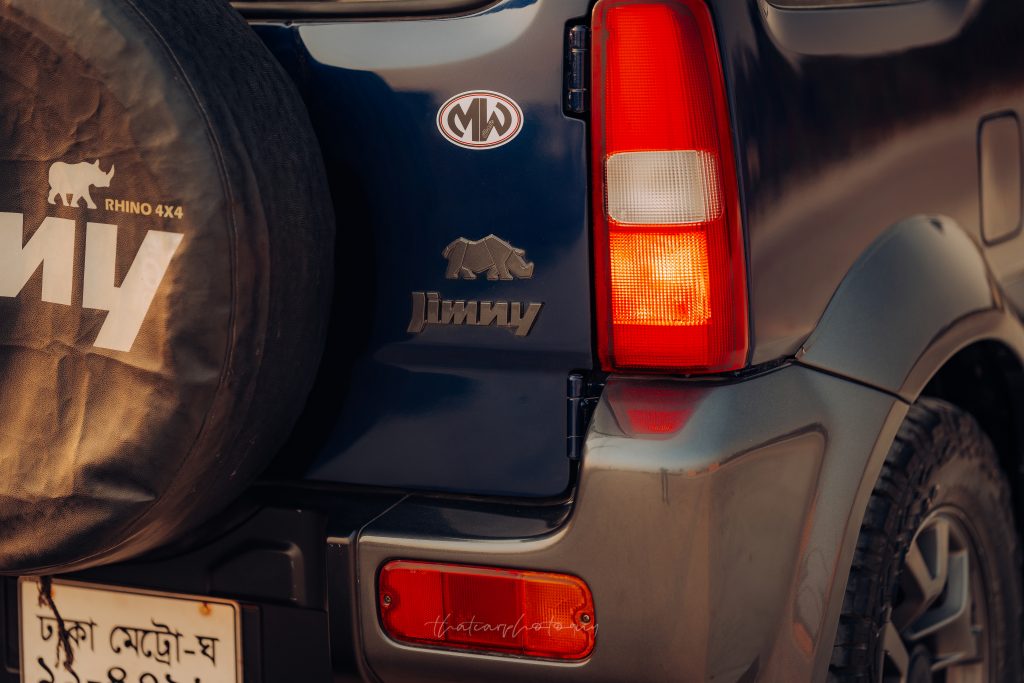
    • Brand-new headlamps and tail lamps instantly updated the front and rear ends.
    • The seats, thankfully, had been covered for most of the car’s working life — preserving the original upholstery underneath. Once uncovered, they revealed themselves in remarkably good condition.
    • The original air-conditioning system remains intact — and still blows ice-cold. A small but meaningful reminder of Suzuki’s durability.
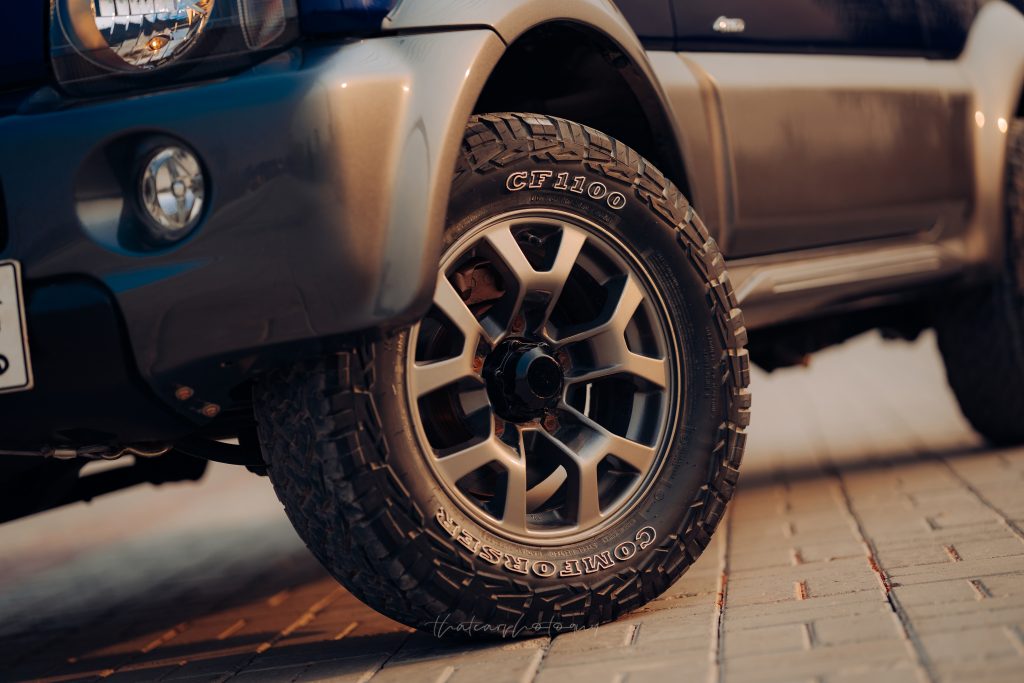
    • Wheels and tyres from the latest-generation Jimny — sourced from a friend who upgraded their new car — gave it a wider stance and a more purposeful posture.
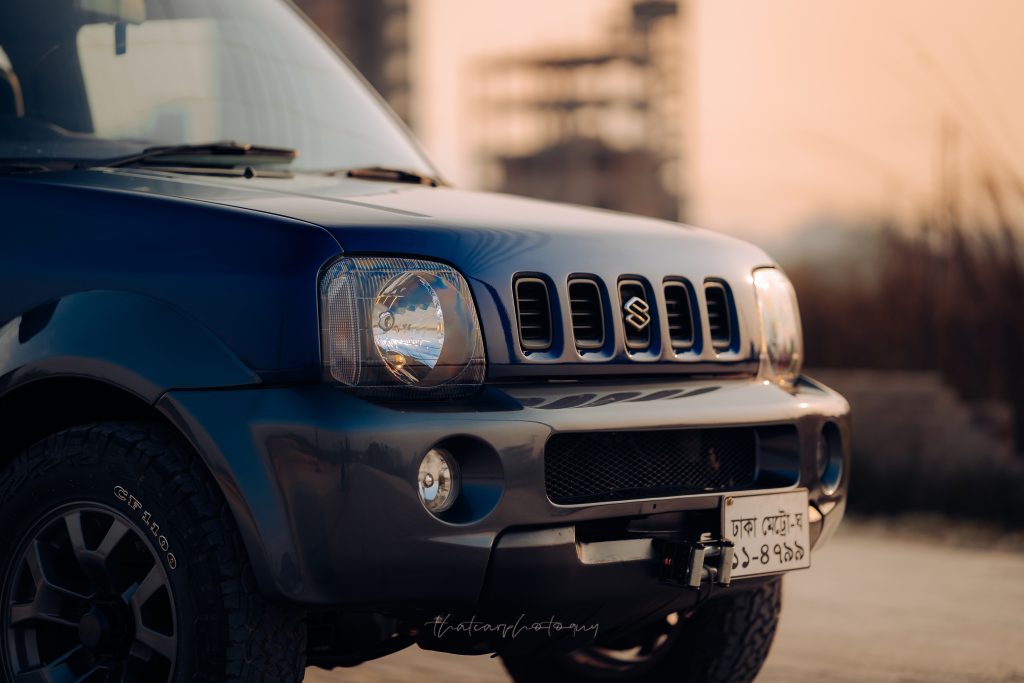
    Brand new headlights freshen up the front end
    Wheels from the 4th gen JC74W Jimny with new tyres

    And then, luck intervened.

    A winch — found locally at an auto parts store — surfaced at just the right time. In a market where sourcing can take months, this was a lucky find. Fitted neatly up front, it completes the transformation from restored classic to functional explorer.
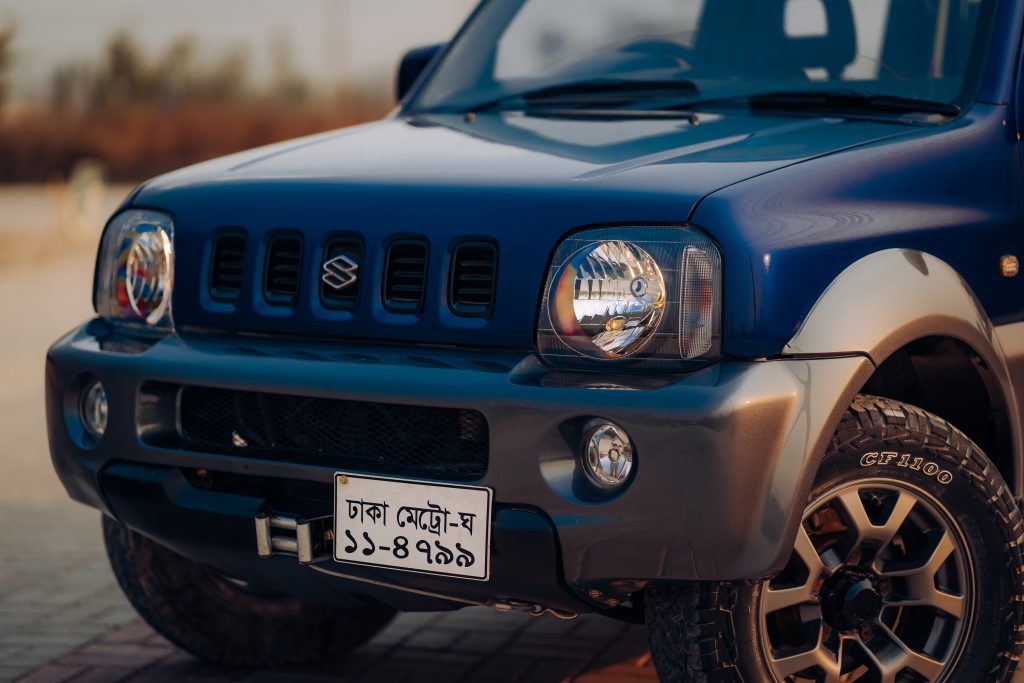
    Winch added for off-road practicality, which meant the number plate had to be put off centre

    A Patient Rebuild in a Difficult Market

    Restoring cars in Bangladesh requires resilience.

    Shipping delays. Limited inventory. Improvisation without compromise. Each part sourced feels earned. Each completed stage feels significant.

    This Jimny was not restored in haste. It was rebuilt with patience — the kind that only true enthusiasts understand.

    More Than a Car
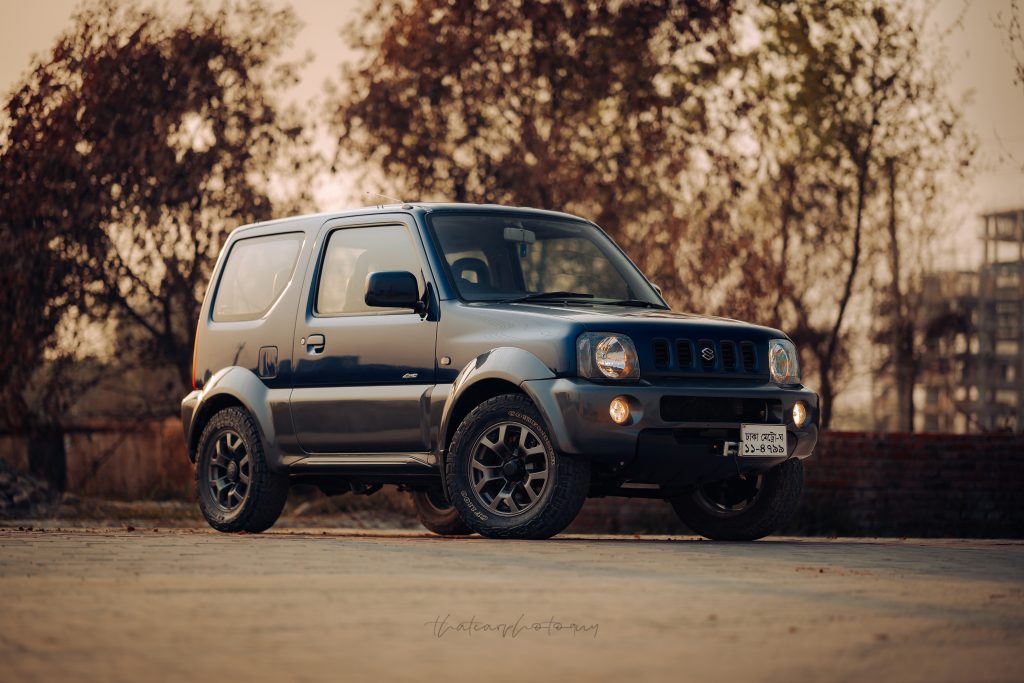
    Wider wheels and tyres enhance the stance

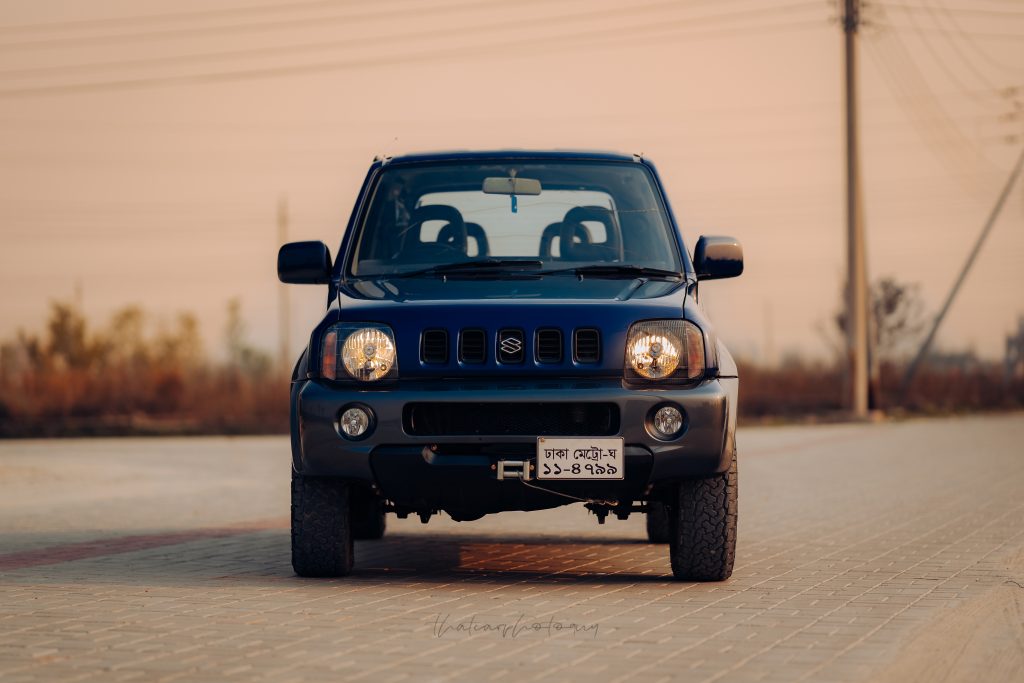
    Today, the once-retired Ministry pool car stands renewed. From a life of government service to near destruction, to careful resurrection — its story mirrors the resilience that makes the Jimny beloved worldwide.

    Small in size. Immense in character.

    Motorwerks didn’t just restore the Jimny. They preserved a piece of mechanical honesty — and proved that even in a challenging environment, tasteful builds are possible.

    Sometimes, the smallest 4×4 carries the biggest story.

    Technical Specifications

    • Model: 2003 Suzuki Jimny JB43W
    • Engine: Rare JB43W 1300cc twin-cam M13A petrol engine
    • Transmission: 5-speed manual
    • Drivetrain: Selectable 4WD
    • Differentials: Center differential lock
    • Axles: Solid front and rear axles
    • Low-range transfer case and centre diff lock
  • Northern: Redefining Car Culture in Dhaka

    Northern: Redefining Car Culture in Dhaka

    A Conversation on Curation, Culture, and the Future of Automotive Expression

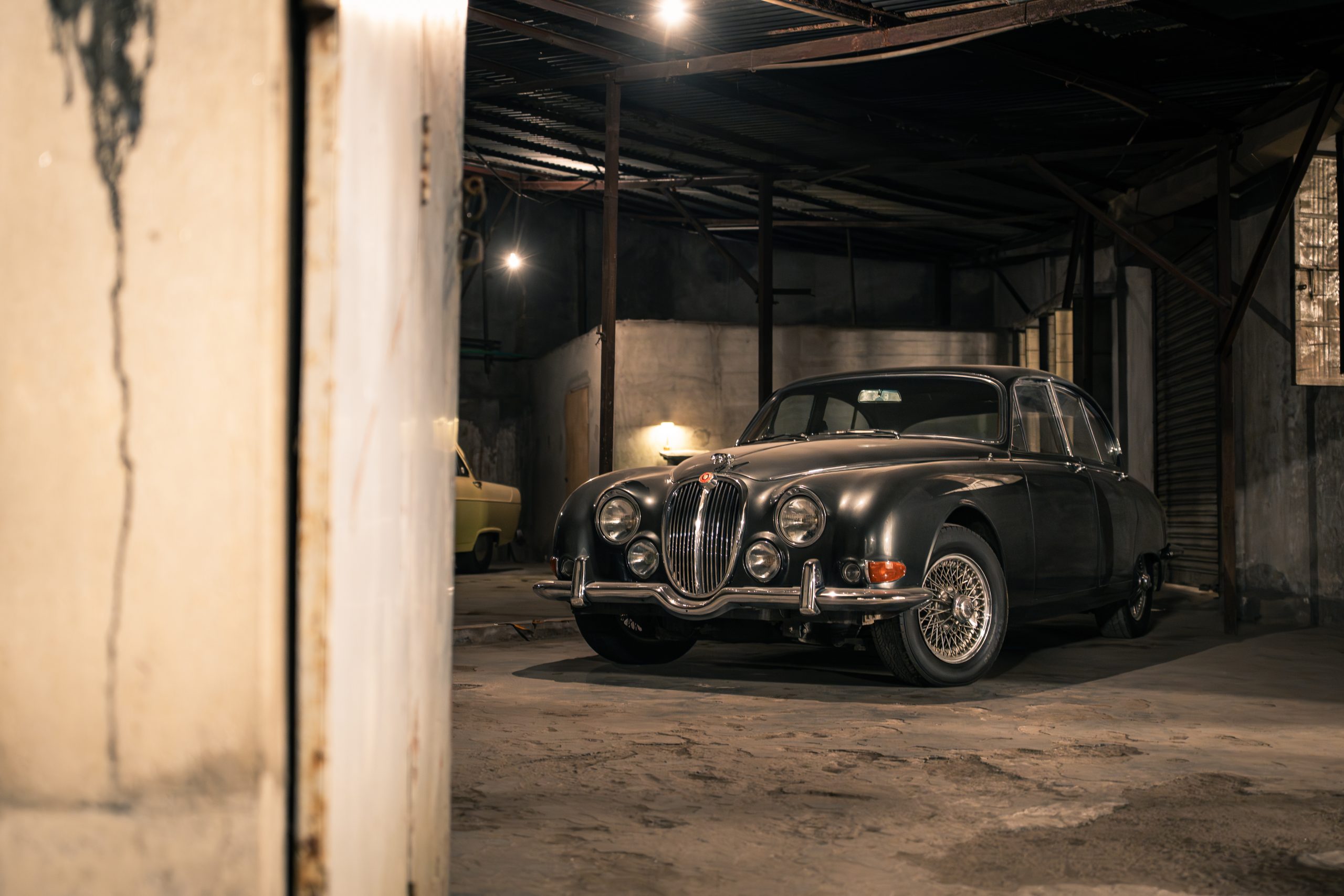
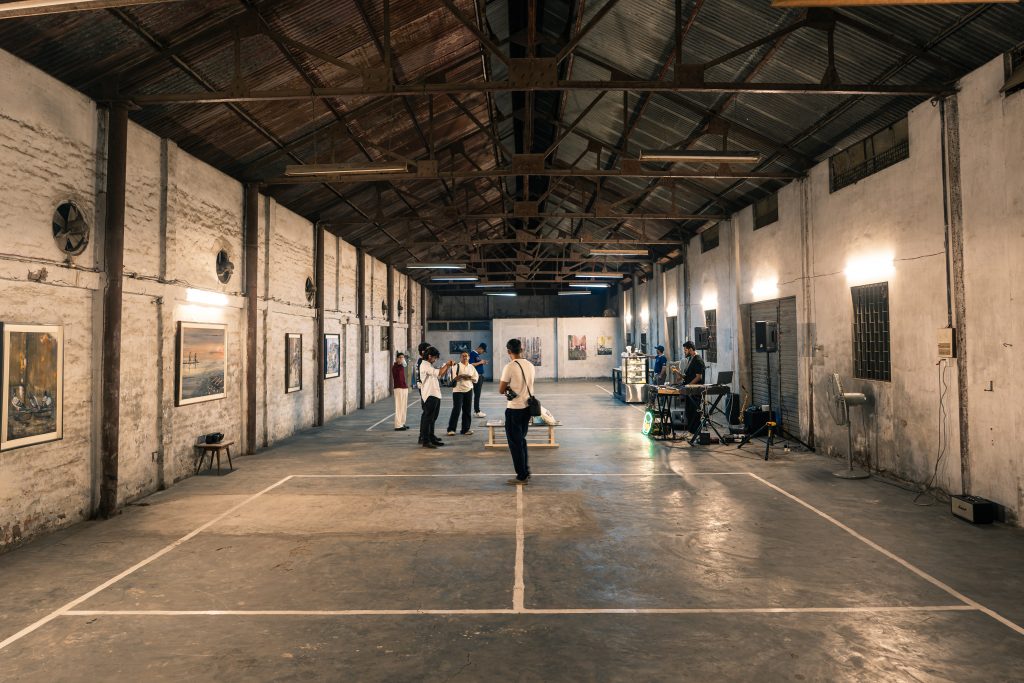
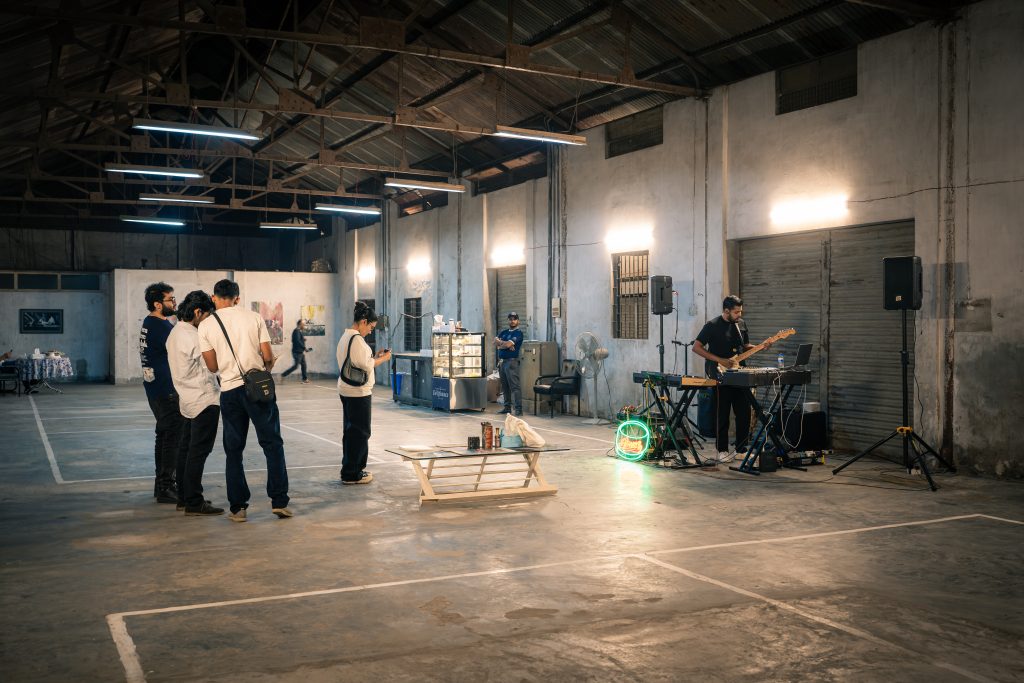
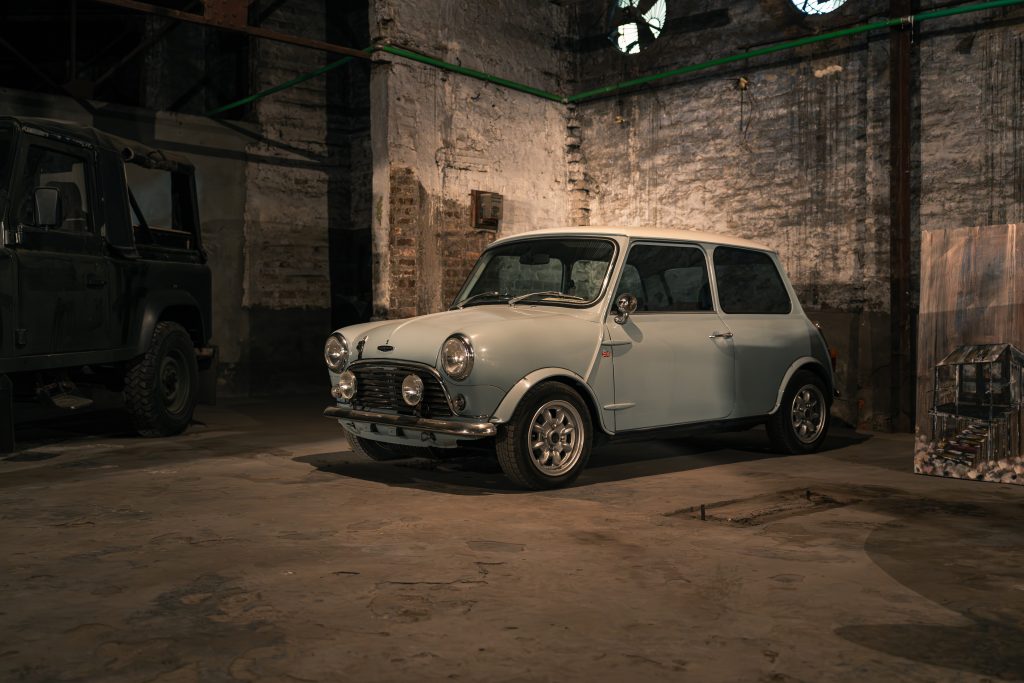
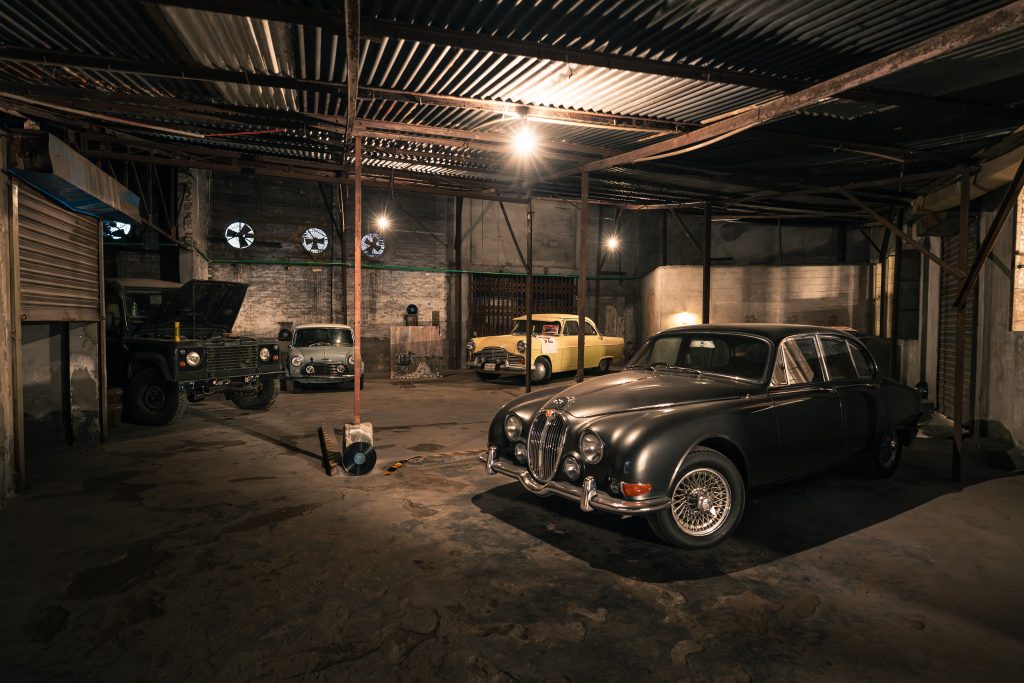
    In a city as intense and fast-moving as Dhaka, car culture has traditionally revolved around meets, noise, and spectacle. But Northern set out to challenge that formula—transforming an abandoned warehouse into an immersive exhibition space where automobiles were not just displayed, but experienced.

    We sat down with the mind behind the concept to discuss inspiration, curation, community, and where Dhaka’s car culture is heading next.

    What was the original inspiration behind the Cars + Art concept?

    We didn’t want to create another traditional car show. The audience that attends those events has often seen these cars before—the same builds, the same format, the same angles.

    What we wanted was something closer to an exhibition than a meet. A carefully curated selection of cars placed in a way that invites you to look twice. Every glance should reveal something new: a reflection, a shadow, a line you didn’t notice before.

    The goal was to shift cars from being consumed quickly to being experienced slowly.

    How does this event reflect your personal interpretation of car culture in Dhaka today?

    Car culture in Dhaka is evolving. It’s no longer just about horsepower or aesthetics in isolation.

    Cars are not two-dimensional objects. They’re design, engineering, identity, status, craftsmanship, storytelling. They’re emotional objects.

    This event reflects my belief that cars should be seen holistically—not just as machines, but as cultural artefacts.

    Venue & Atmosphere

    Why choose an abandoned warehouse as the venue? What role did the industrial setting play?

    Truthfully, the space already existed. But the moment we stepped inside, we realised its potential.

    When a space feels more dilapidated than the cars inside it, the contrast becomes powerful. The rawness strips away distraction. Exposed concrete, cracked walls, industrial decay—these imperfections elevate the precision and detail of both the cars and the artwork.

    The venue wasn’t just a backdrop. It became part of the narrative.

    Did the space influence how the experience was curated?

    Absolutely. We worked with the space, not against it.

    We used cracks in the walls, pockets of darkness, natural textures, and minimal lighting to create mood. Instead of over-polishing the environment, we allowed the raw atmosphere to frame the objects.

    It forced us to think creatively—where to position each car, how shadows would fall, how movement through the space would feel.

    What challenges came with transforming a non-traditional space into a cultural car meet?

    Cleaning and preparing multiple old factory warehouses was the biggest logistical hurdle.

    Beyond that, there’s no template for turning an abandoned space into an experiential exhibition. Every solution—from lighting to layout to flow—had to be crafted from scratch.

    But that constraint is what made it interesting.

    Art, Cars & Community

    How were the cars selected? Was there a specific philosophy behind the curation?

    I approached it as a curator first, not an event organiser.

    Each car needed to contribute to a visual and conceptual conversation within the space. There had to be intention—through design language, build philosophy, rarity, or presence.

    Curation isn’t about quantity. It’s about selection.

    Why was it important to involve artists and creatives?

    Including an artist was essential. Cars alone create admiration—art introduces interpretation.

    I wanted creatives who understood form, texture, and contrast. Cars can be sculptural objects. Art can carry motion and engineering influence.

    Bringing them together created dialogue instead of parallel appreciation.

    How do cars and art complement each other in a Dhaka context?

    This intersection hasn’t been deeply explored here before.

    The same individuals who collect cars often collect art, watches, and design objects—but these interests exist in silos.

    By intertwining them, we acknowledge that appreciation for craftsmanship and design transcends medium. As Dhaka progresses culturally and economically, disciplines must overlap. That’s how culture evolves.

    Was collaboration intentional or organic?

    Collaboration was a core intention from the start.

    The vision was to create an amalgamation of curated objects and creative disciplines—to design an experience rather than just an event.

    You cannot create a meaningful experience through one sensory dimension. It requires visual depth, atmosphere, sound, movement, texture—all working together.

    That synthesis is where culture begins to form.

    Car Culture in Dhaka

    How is Dhaka’s car culture evolving today?

    It’s progressing more seriously than ever.

    People are researching deeply. They’re maintaining, restoring, and refining their cars properly. They’re learning about detailing, mechanical integrity, preservation, originality.

    But it’s often an uphill battle. The climate is harsh. Fuel quality isn’t ideal. Bureaucracy complicates ownership. Infrastructure doesn’t always support enthusiasm.

    That’s what makes it meaningful.

    This community fights through all of that just to remain part of something outsiders might call a “cult.” But it’s more than that—it’s perseverance.

    What we need now is a shift—from generic meets to meaningful dialogue. Spaces that educate and inspire the next generation.

    Let’s not allow cars to become appliances. There is history, craftsmanship, and identity embedded in them.

    Do events like this help change public perception of car meets?

    Absolutely.

    By intentionally limiting the number of cars on display, people were forced to slow down and engage. They noticed new angles, reflections, small details they might otherwise overlook.

    It became less about spectacle and more about contemplation.

    Sometimes you need stillness to truly observe.

    That shift—from volume to depth—is what changes perception.

    What makes Dhaka’s car scene unique compared to other cities?

    The people.

    Despite climate challenges, regulatory hurdles, limited parts access, and logistical barriers, the community continues to build, restore, modify, and preserve.

    In cities where everything is accessible, passion can become convenience. In Dhaka, passion requires effort.

    That effort creates character.

    Impact & Reflection

    What reaction did you receive from attendees?

    The strongest reaction was a realisation that Dhaka needs private, intentional spaces.

    In a city that is constantly loud and overstimulating, people are craving environments where communities can rebuild themselves quietly.

    Many said it didn’t feel like an “event.” It felt like a pause. A moment of alignment.

    Beyond cars and art, people are searching for belonging.

    Was there a moment when you felt the concept truly worked?

    Yes—and it surprised us.

    On the second day, a renowned jazz musician performed. We assumed that would draw the larger crowd. Instead, the first day—purely focused on curation—had stronger turnout.

    That’s when it clicked.

    People weren’t coming for spectacle. They were coming for the concept itself.

    It forced us to trust our vision more deeply.

    What was the biggest lesson from organizing this meet?

    Trust.

    Trust in our instincts—and trust from the community.

    We questioned whether Dhaka was ready for something this restrained. Whether people would pay to attend a space that, by conventional standards, looked broken.

    But the response showed us we’re providing something genuinely valuable.

    Now the responsibility is to expand the conversation.

    Looking Ahead

    Will Cars + Art evolve in future editions?

    Absolutely.

    Future events will likely be more theme-specific with tighter narratives. But no two editions will ever be the same. Repetition dilutes experience.

    The scale will remain intimate. Inspiration flows best when people aren’t overstimulated.

    What do you hope attendees take away?

    Inspiration.

    If someone leaves thinking differently—about cars, design, culture, or interdisciplinary creativity—then we’ve succeeded.

    If they leave wanting to build better, curate better, observe more deeply—that’s enough.

    Where do you see Dhaka’s car culture heading in the next few years?

    Taste is becoming the new currency.

    It’s no longer about owning the most expensive car. It’s about restraint, coherence, and understanding.

    Taste cannot be purchased. It’s earned.

    As access increases, discernment becomes the differentiator.

    If we can help shape a culture where narrative, refinement, and thoughtfulness matter more than excess, then we’re moving Dhaka’s car culture forward.

  • The Car That Started It All – A 1995 Civic, rediscovered

    The Car That Started It All – A 1995 Civic, rediscovered

    Some cars pass through your life quietly. Others stay with you long after they’re gone.

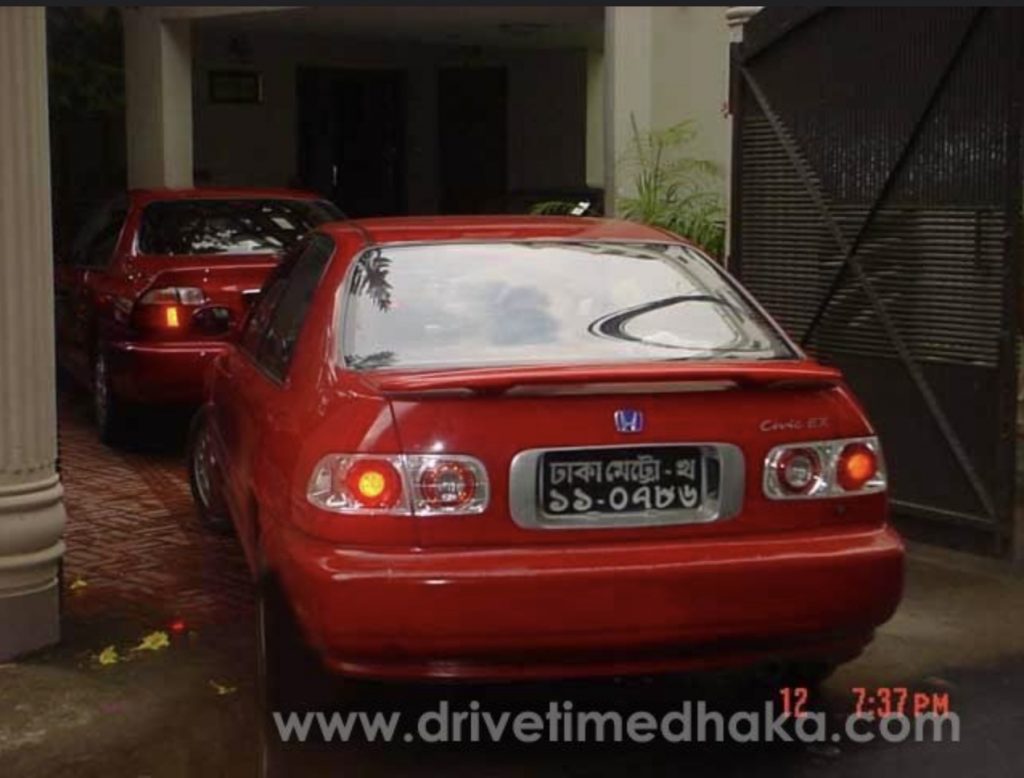
    This one arrived in 1995, brand new, painted in Honda Milano Red. I was 13 years old, already deeply obsessed with cars, and I remember having to actively convince my father that this was the car to buy. He listened, but what I didn’t expect was the surprise that followed: one afternoon, he turned up outside my school in a brand-new Honda Civic. For a kid who lived and breathed anything with wheels, it was a moment that felt unreal. That Civic didn’t just take me home that day — it lit a fuse.

    That car became the foundation of my passion for motoring.

    Growing up together

    I learned to drive in that Civic. I learned what it meant to care for a car, to listen to it, to gradually shape it to your own tastes. Like many enthusiasts of the early internet era, I spent countless hours reading forums, absorbing opinions, and slowly piecing together my own vision. Whenever I travelled abroad, I’d hunt for parts. The most significant score came in 2001 — a set of Altezza tail lights I carried back from New York, a prized modification at the time.

    Altezza tail lights that were on the car

    That Civic wasn’t just transport. It was a classroom, a companion, and eventually, part of something bigger. Along with my friend Asad Moyeen, it played a role in inspiring the launch of drivetimedhaka.com, at a time when car culture in Bangladesh was still finding its voice.

    In 2003, the Civic left our family. It was sold to a family in Sylhet, and for nearly two decades, it disappeared from my life completely.

    Found again

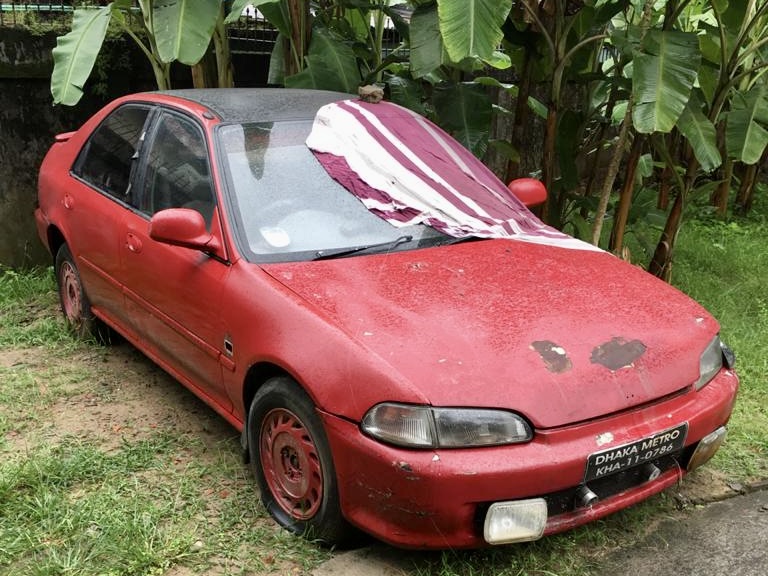
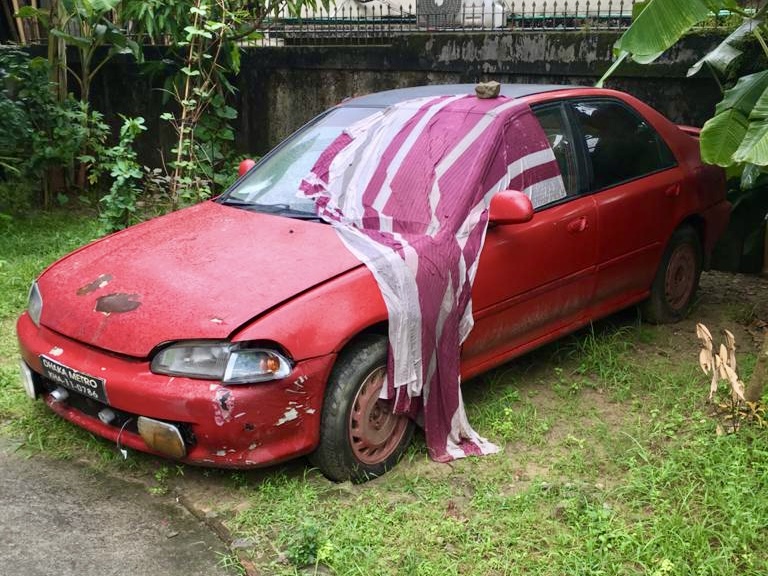
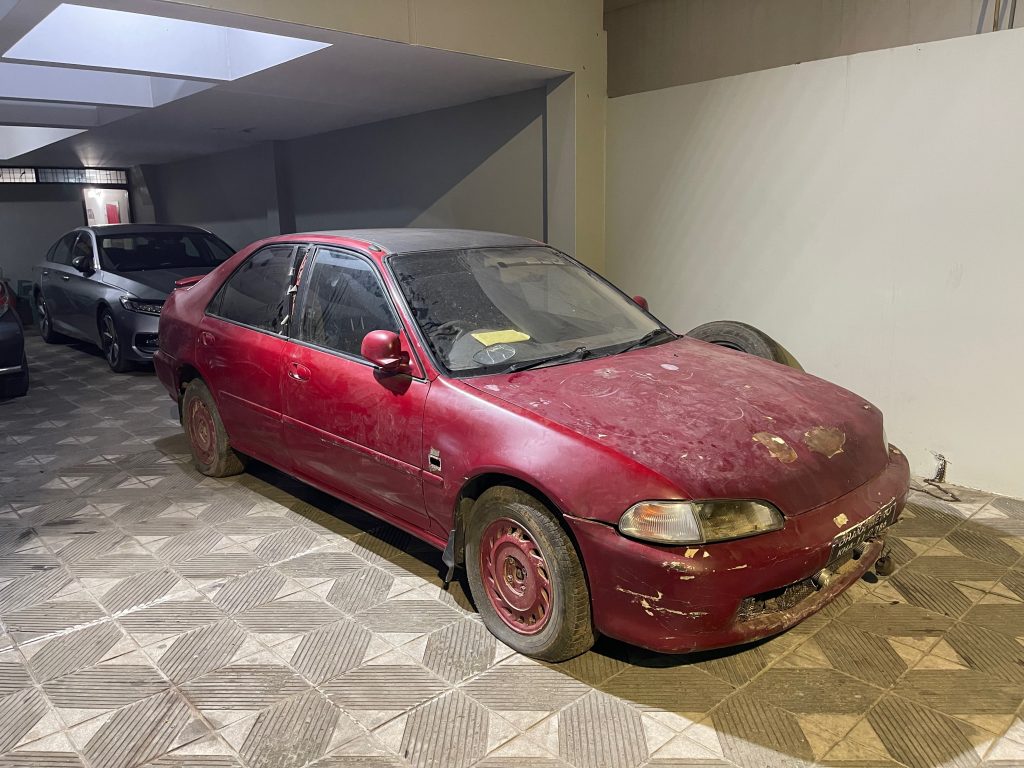
    In 2021, out of the blue, a cousin sent me photos. He’d spotted the car in Sylhet — unmistakably the same one — and it was available. The images showed a very different Civic: tired, weather-beaten, sitting unused outdoors for nearly a decade. The red had faded, rust had begun to creep in, and time had not been kind.

    I didn’t hesitate.

    Found in Sylhet!
    Neglected and open to the elements
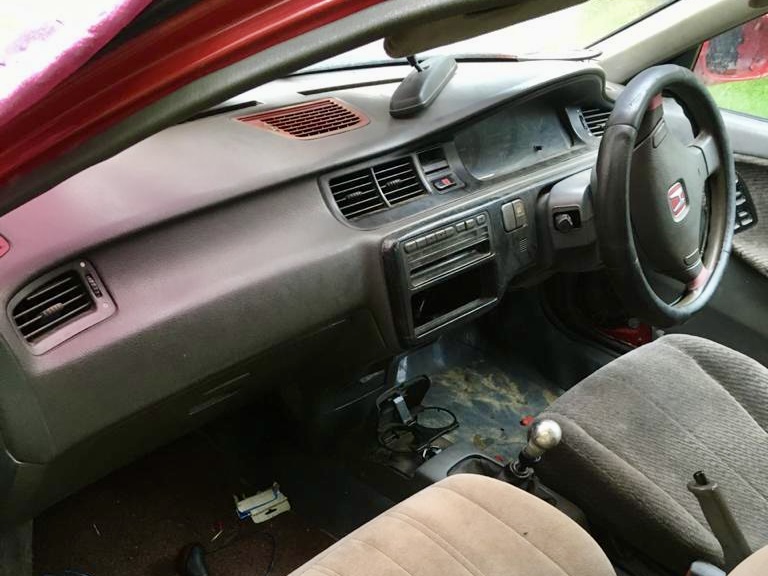
    Interior in a state!

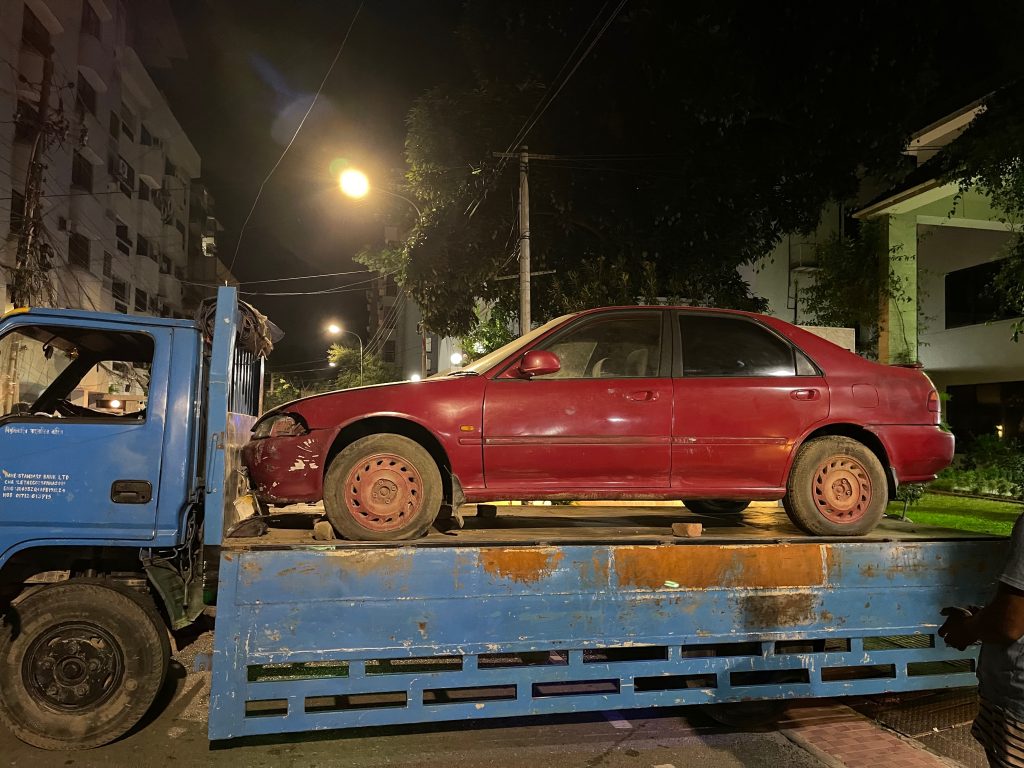
    When the car came back to our house, still registered in my late father’s name, with expired papers and years of neglect behind it, I knew instantly this wasn’t just another project. This was something personal. Something that deserved patience and respect.

    Trucked back to Dhaka
    First night back at home!
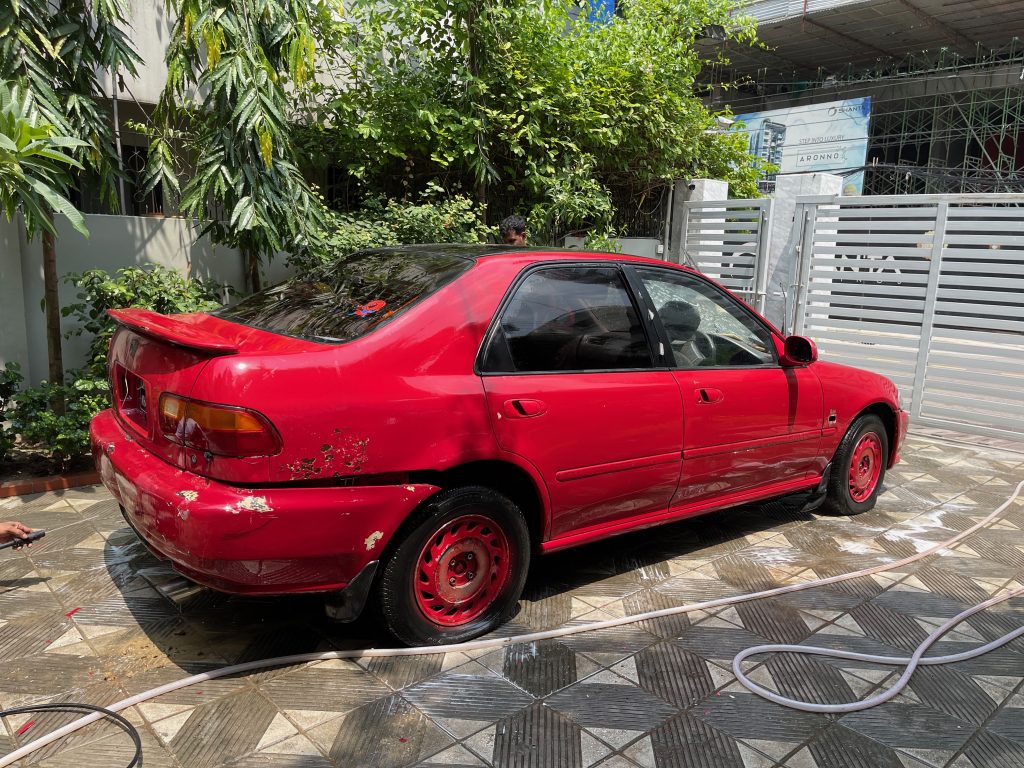
    First wash the next morning
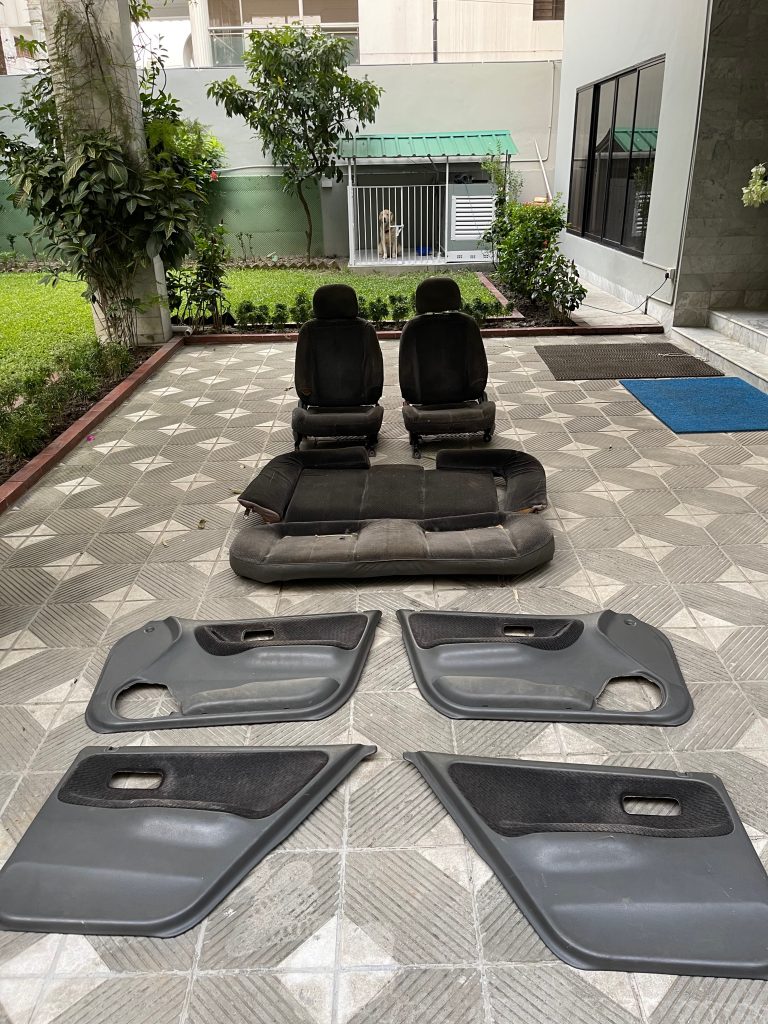
    Seats and door pads stripped and cleaned immediately!

    A slow, considered rebuild

    The goal was never to overbuild the car or modernise it beyond recognition. This was always going to be an OEM+ restoration — faithful to the original, but quietly improved where it mattered.

    The car was sent to a trusted local garage, where it underwent a comprehensive mechanical and cosmetic overhaul. The engine was fully rebuilt, the suspension refreshed, the bodywork addressed properly, and the interior carefully restored. Mechanically, it came back sorted and genuinely enjoyable to drive. Later, lingering carburettor issues were resolved at MotorWerks, finally allowing the D13B to run as it should.

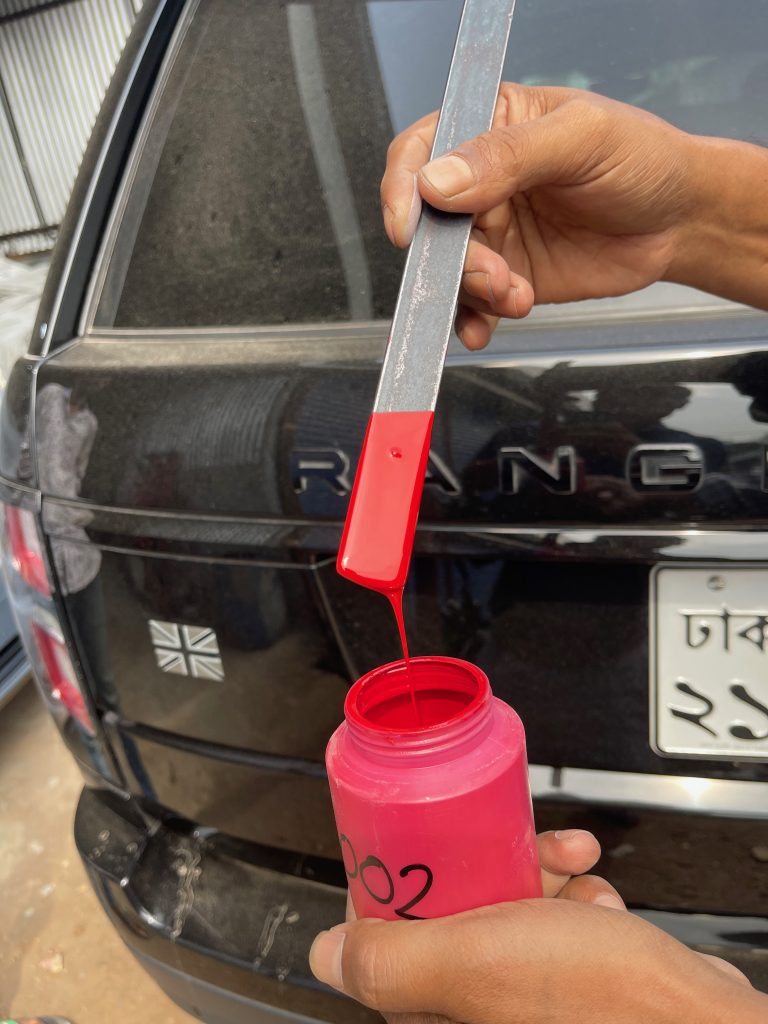
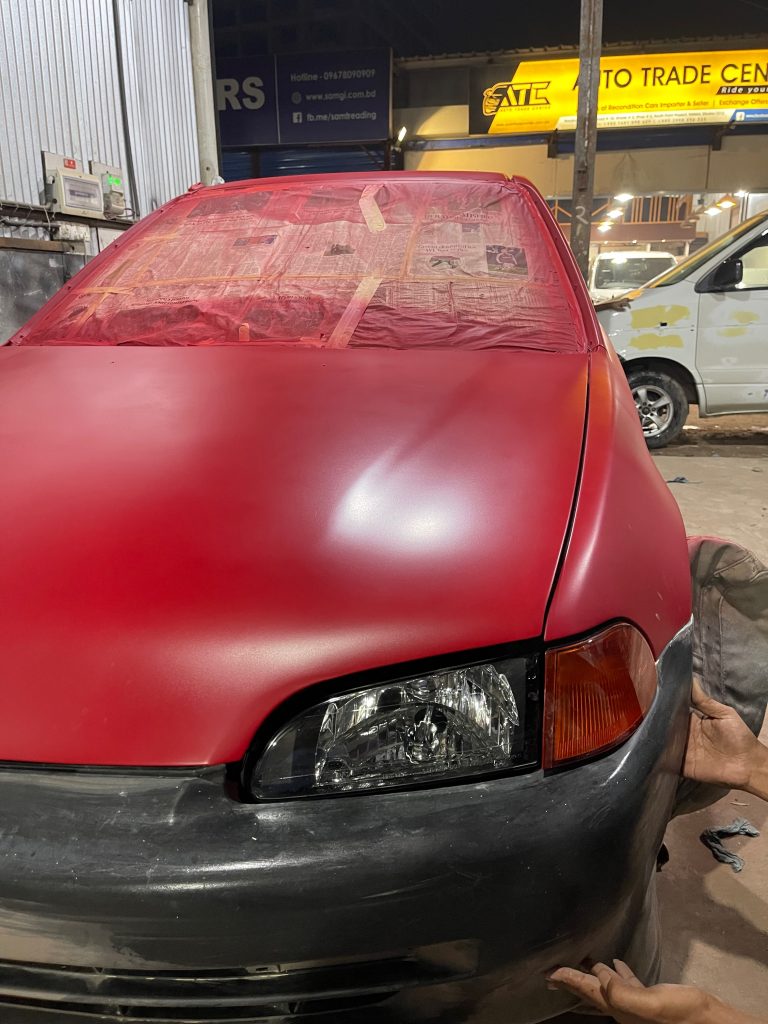
    Selecting the new paint shade – Porsche Carmine Red M3C
    Test fitting the new blacked out headlights and amber corners along with the new bumper
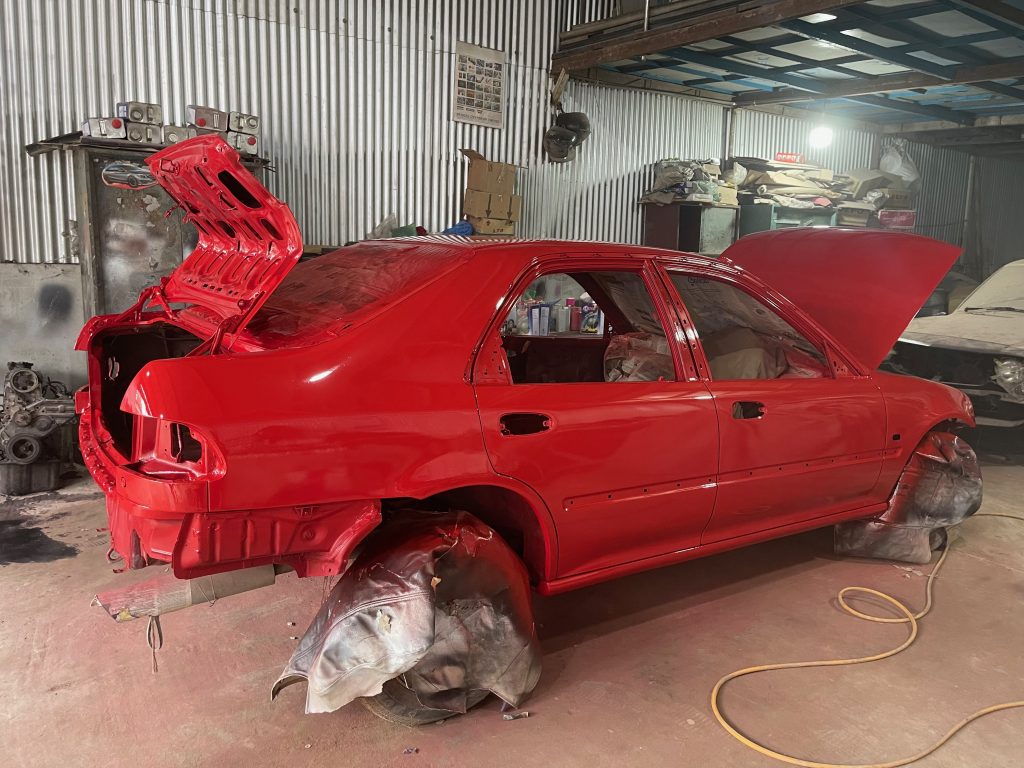
    Freshly painted!

    One of the small joys of the process came from the details. The Altezza tail lights were on the car and I’d somehow held onto the original tail lights at home for over a decade — an unexpected full-circle moment.

    The tail lights survived and are in perfect condition

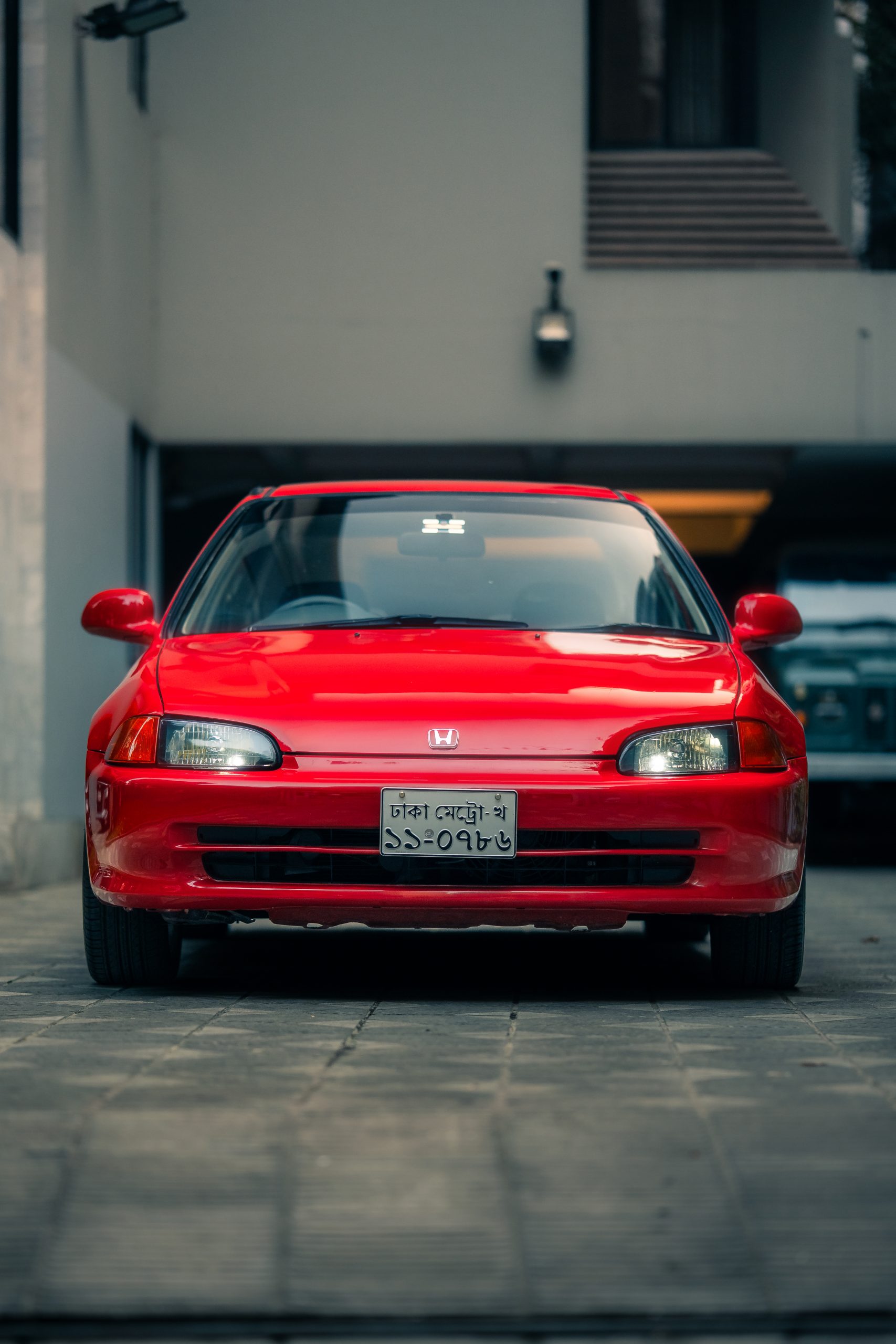
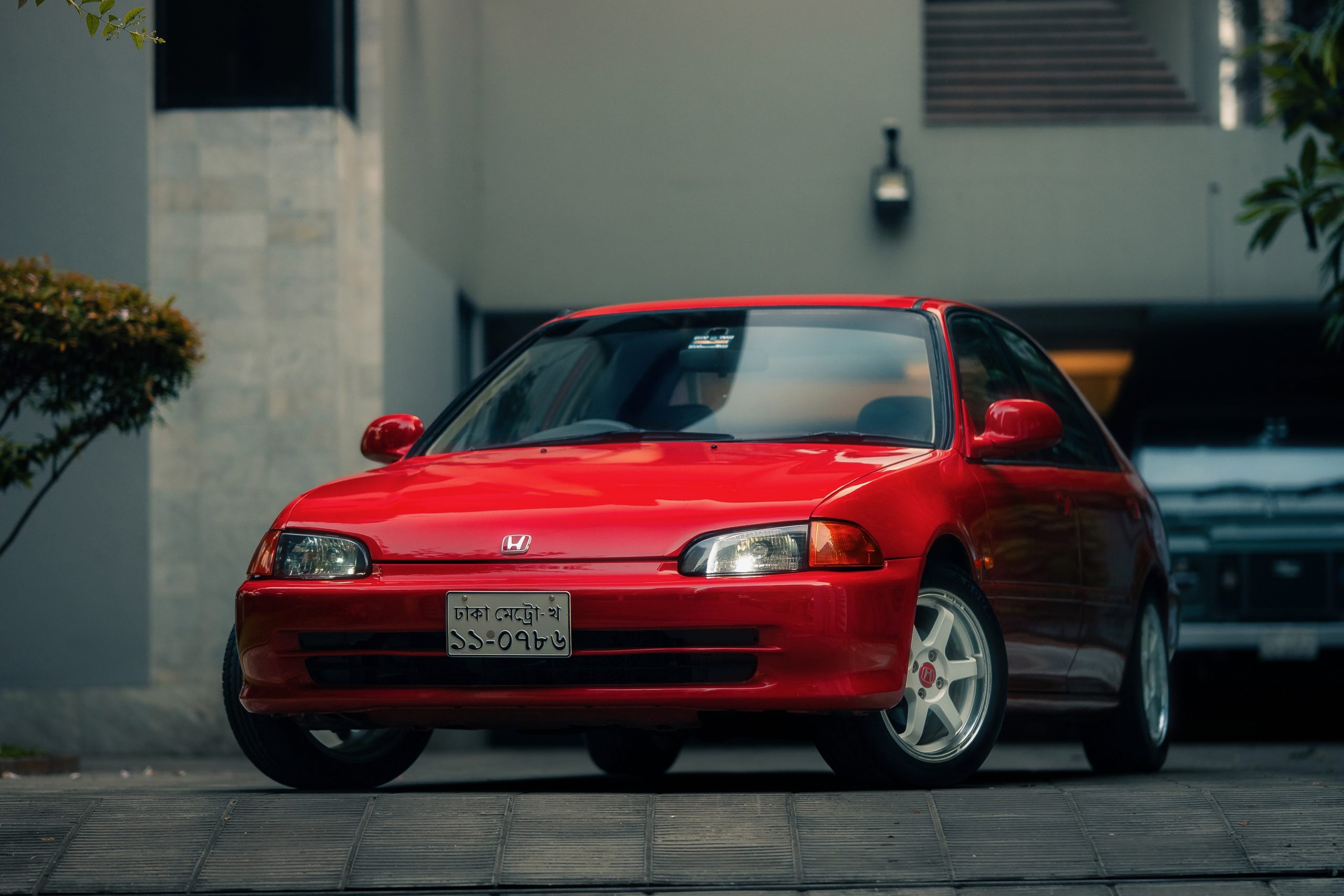
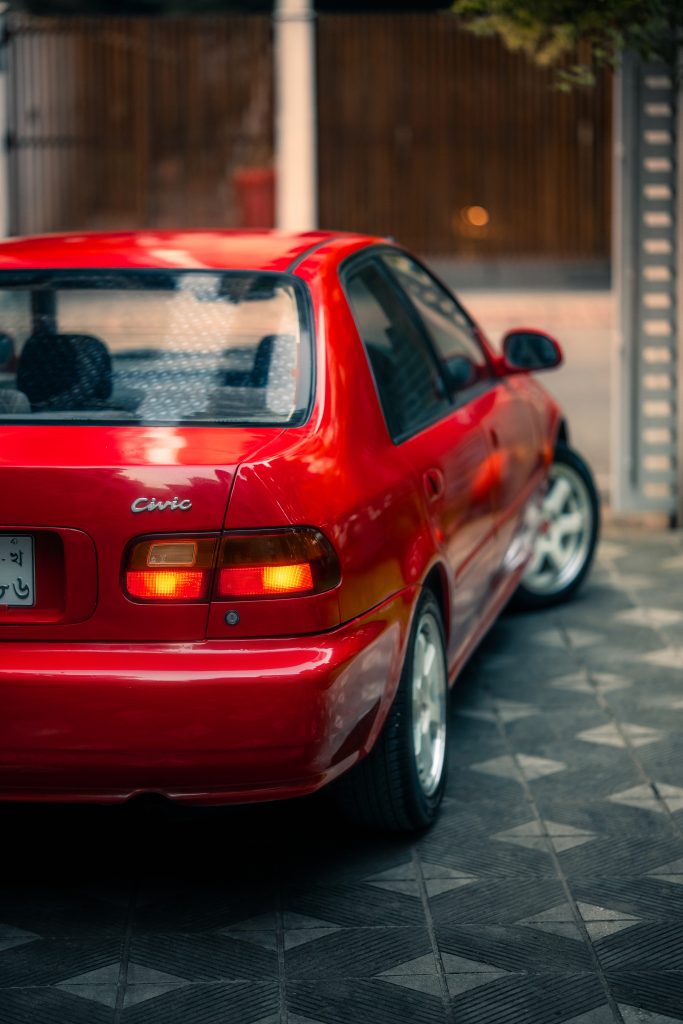
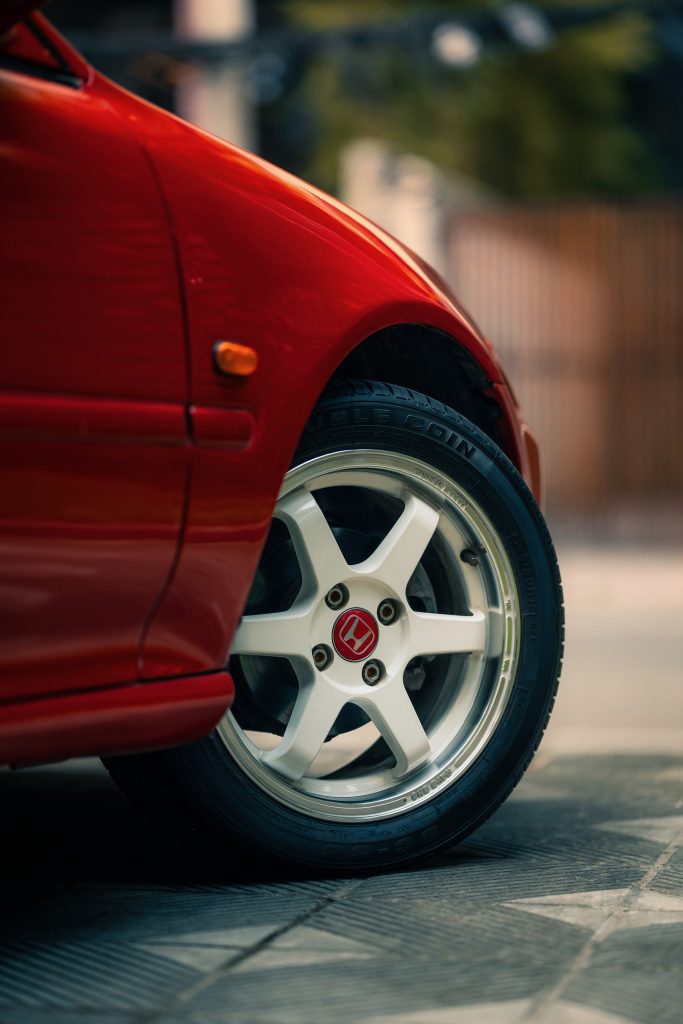
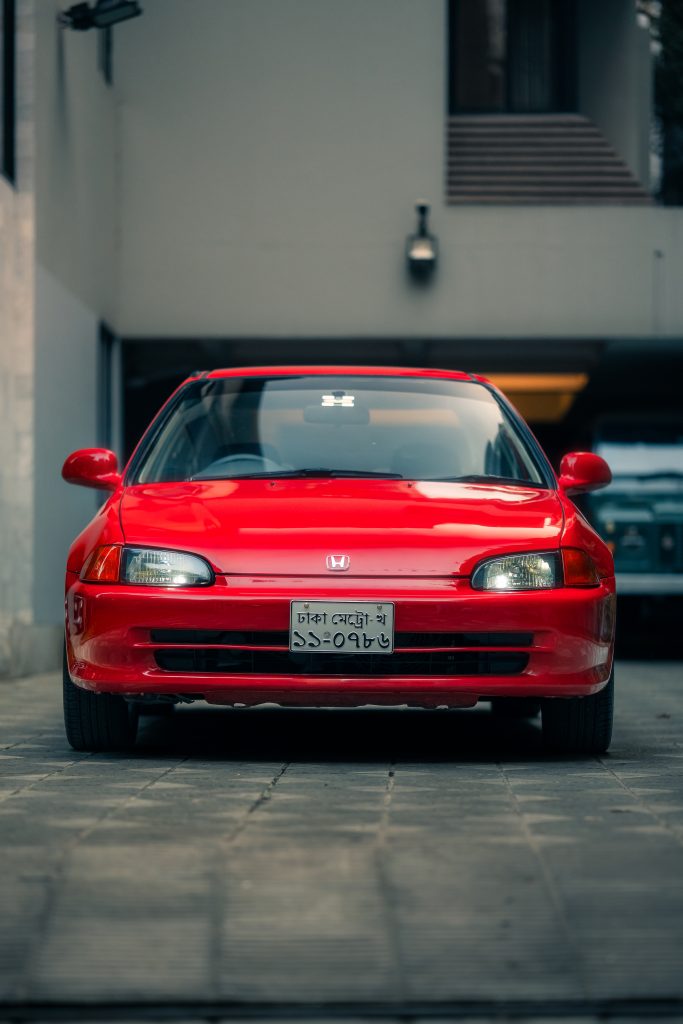
    The original Milano Red gave way to Porsche Carmine Red, a subtle but richer shade that suits the Civic’s lines beautifully. A set of white alloy wheels was added, wrapped in fresh tyres — a nod to the JDM influence that defined so much of this car’s earlier life. The suspension was lowered by 20mm on coilovers, transforming both the stance and the way the car handles without sacrificing its character.

    White 15inch wheels with Double Coin tyres

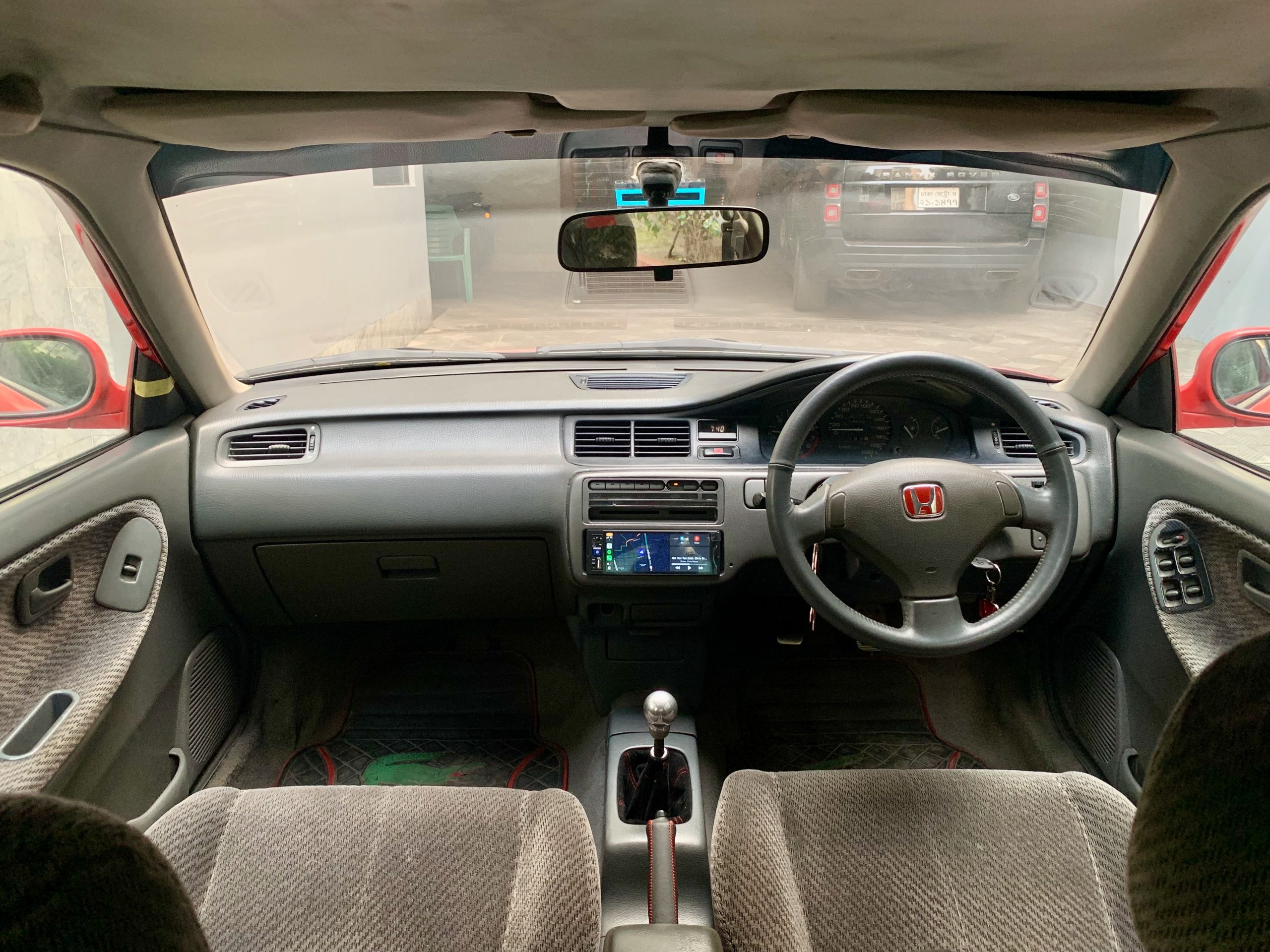
    Inside, the car surprised all of us. Thanks to seat covers used by the previous owner, the interior fabric was remarkably well preserved. Aside from a small tear on the driver’s seat, it felt like stepping back in time.

    The rebuild began in June 2021 and concluded in December 2022. Anyone who’s restored a car knows this timeline isn’t unusual — parts take time to source, funds need to be gathered, and details demand patience. Friends helped along the way: badges sourced from Bangkok, headlights tracked down on eBay. It became a shared effort, just as it had been all those years ago.

    Period-correct cloth seats paired with a modern Apple CarPlay stereo for everyday usability

    Why it still matters

    This generation of Civic (EG8) was Japan Car of the Year in 1992, and for good reason. It was a global car in the truest sense — reliable, well-engineered, and endlessly engaging. Even with its humble D13B carburettor engine, the manual gearbox makes it feel lively, and the refreshed suspension brings a level of fun that reminds you why these cars earned such a following worldwide.

    The final hurdle came much later. In late 2025, the paperwork was finally updated — penalties and renewal fees costing more than the restoration itself. Worth every taka.

    Home again

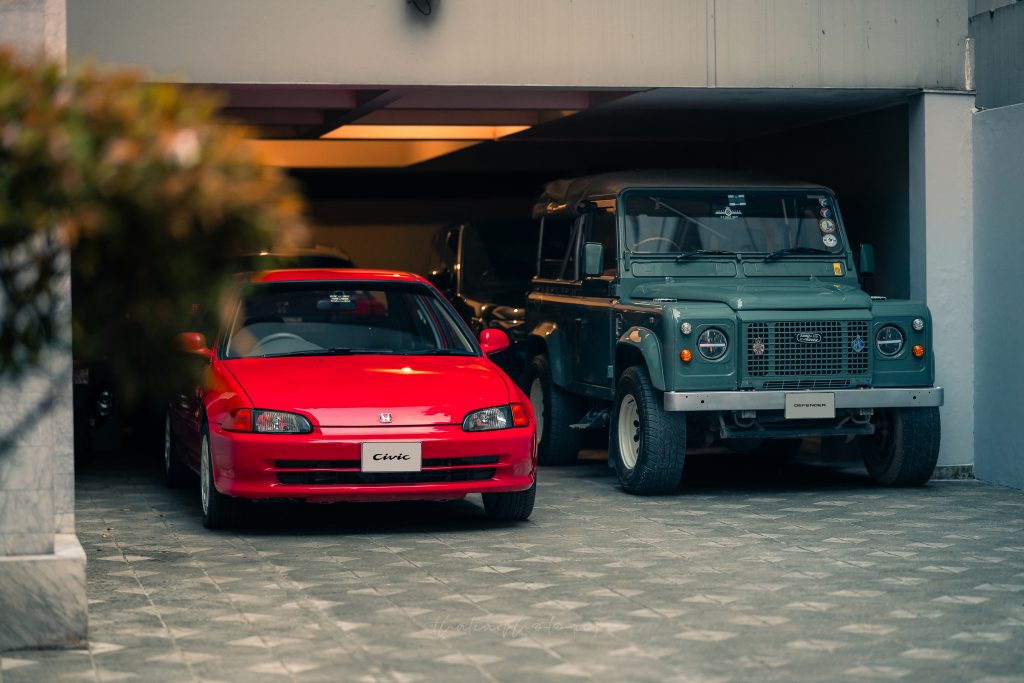
    Today, the Civic is driven sparingly. It’s not a showpiece, and it’s not chasing trends. It’s a time capsule — a car returned to the people who first loved it, now cared for with the patience and perspective that only time can give.

    Restoring it wasn’t about perfection. It was about preservation. About honouring a car that shaped my childhood, my interests, and ultimately, a big part of who I became.

    Some cars never really leave you.
    This one just took the long way home.

  • Welcome to drivetimedhaka.com

    We’re relaunching Bangladesh’s first motoring website that was started in 2003. Stay tuned for updates!