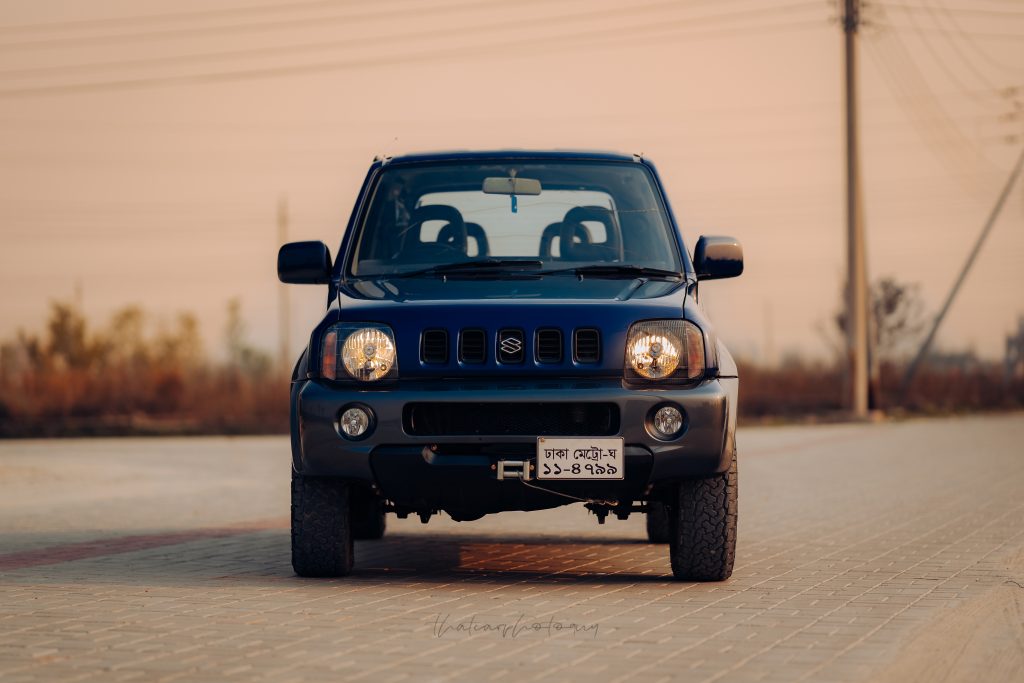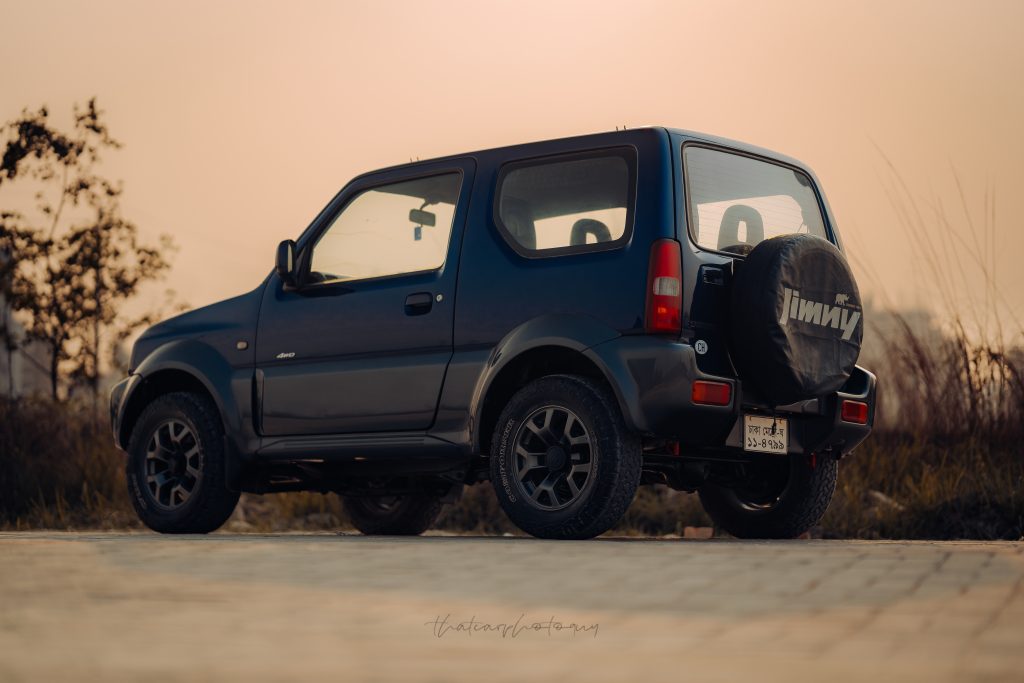
There is something deeply honest about a Jimny.
No pretence. No unnecessary bulk. Just a ladder frame, a small-capacity petrol engine, and the quiet confidence of a proper 4×4 system. Around the world, the Suzuki Jimny enjoys cult status — from Japanese mountain roads to Australian cattle farms and European green lanes. In Bangladesh, however, most live hard lives. This one may have lived the hardest of all.
A Life in Public Service
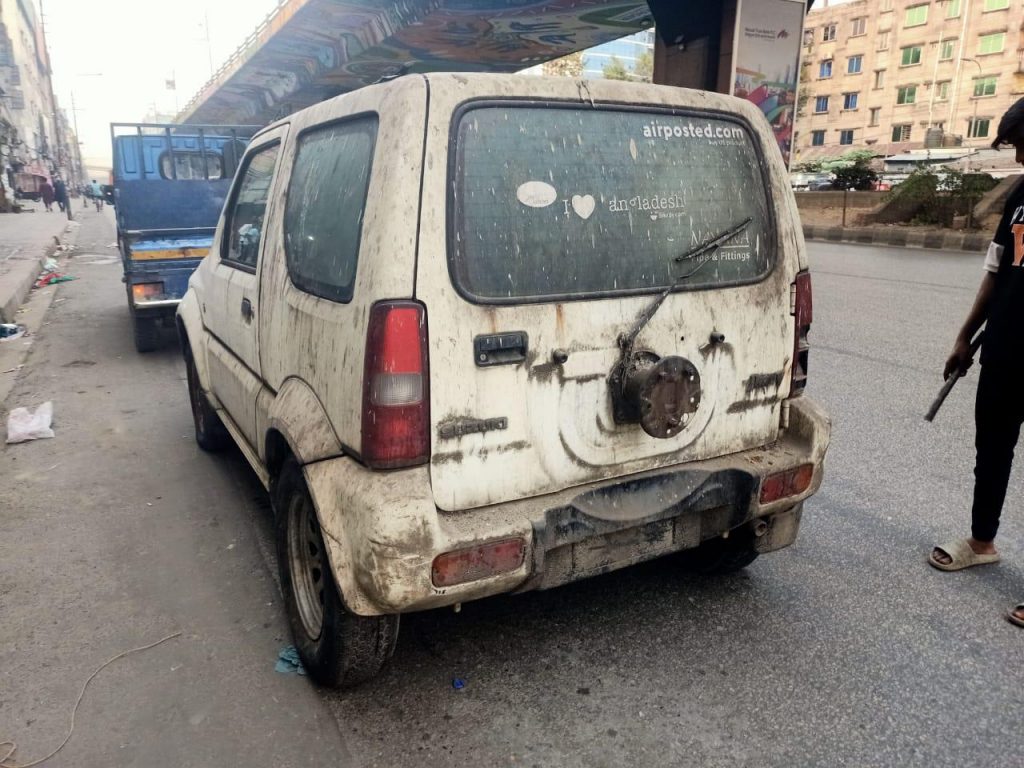
This 2003 JB43 — powered by Suzuki’s dependable 1.3-litre engine — began its life not as a lifestyle accessory but as a government workhorse. It served under the Government of Bangladesh in the Ministry of Health pool fleet.
For years, it travelled across the country — city traffic, rural clinics, pot holed backroads — carrying officials, files, and responsibility. It was never pampered. It was used.
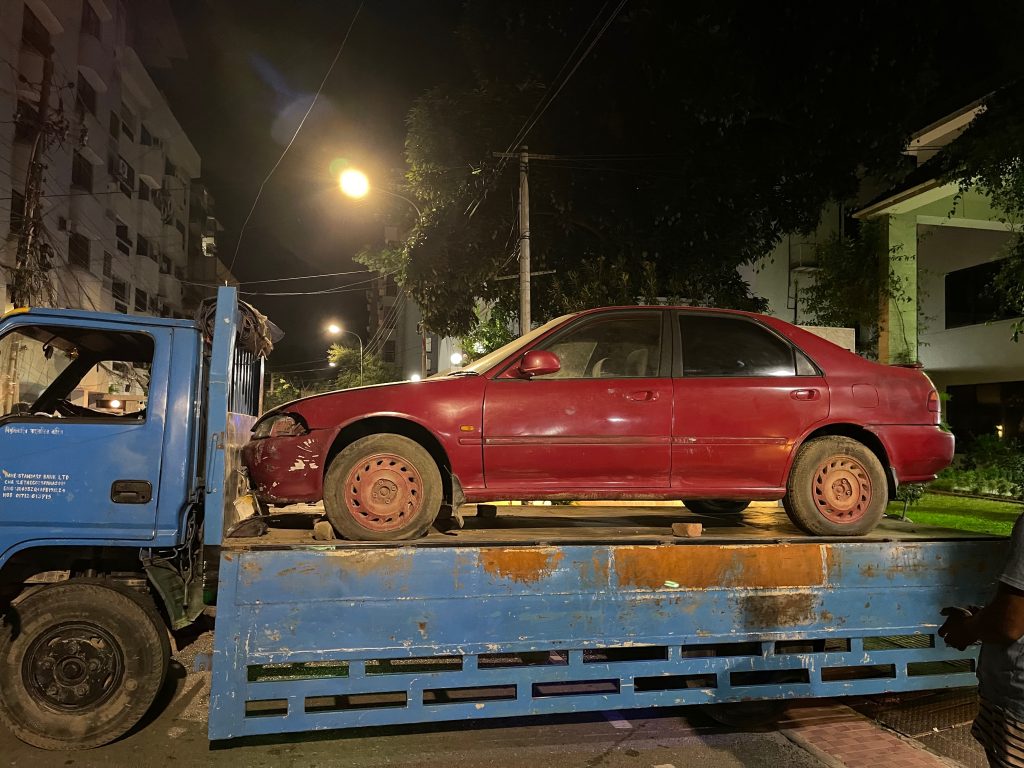
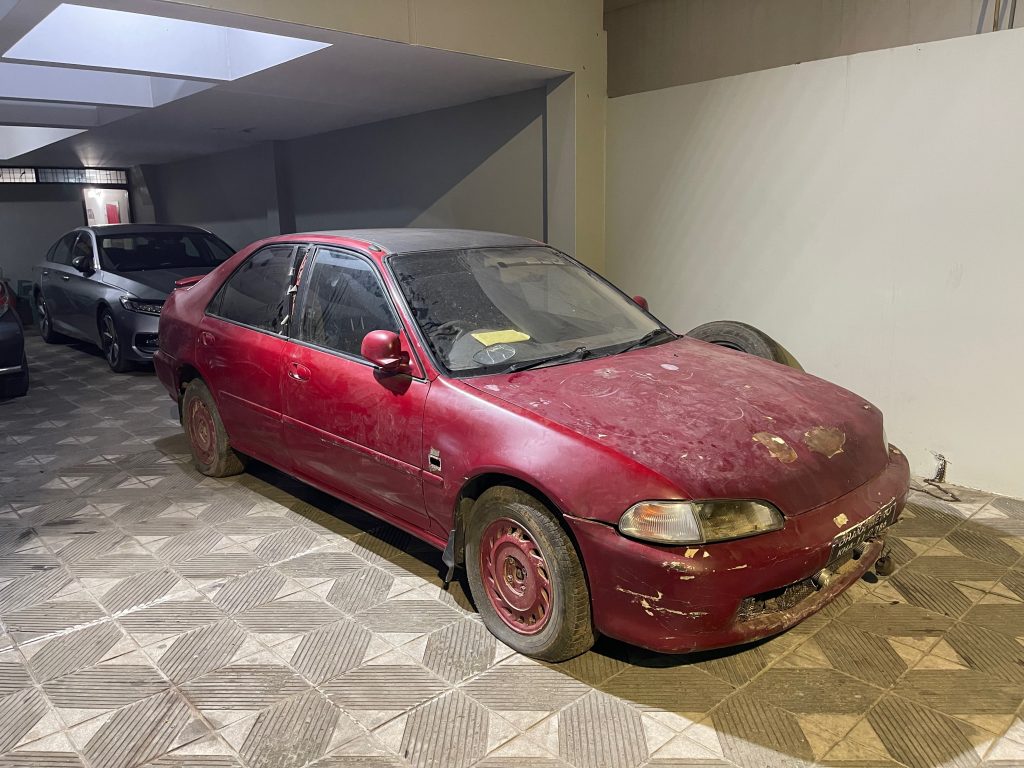
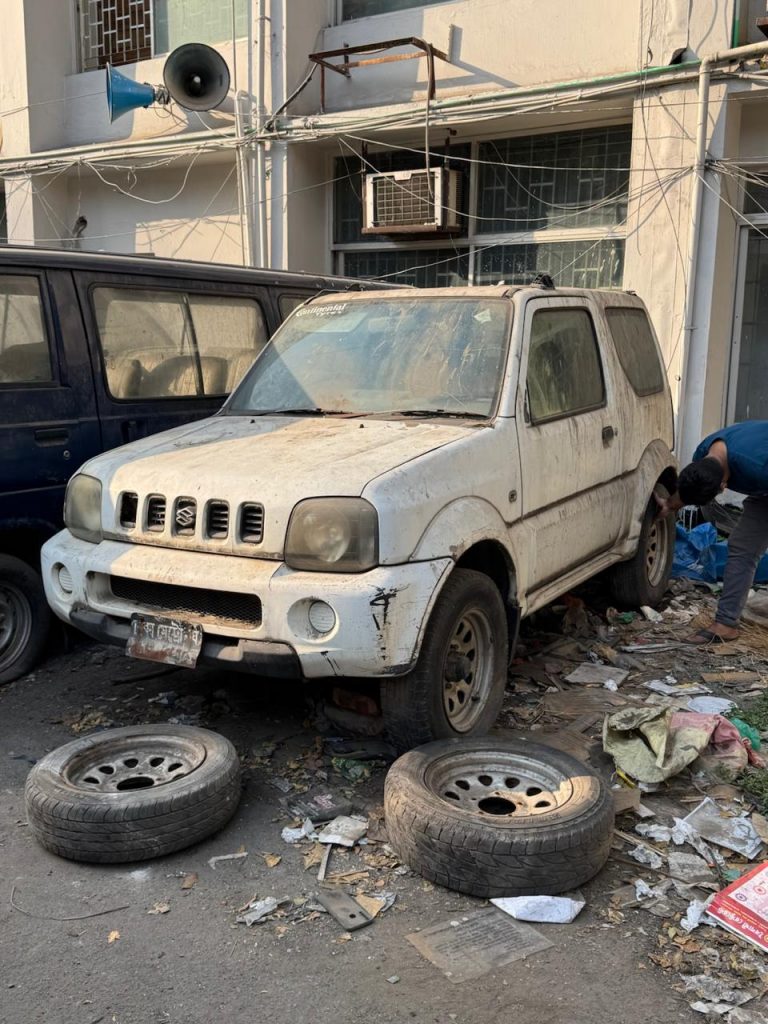
Like many pool cars, maintenance was functional rather than thorough. When engine issues began to surface, the decision was simple: retire it from active duty. By 2025, it was put up for sale in a government auction — tired, worn, and mechanically unwell.
Most would have walked away.
July’ 24 Revolution — The Day It Survived
History has strange ways of choosing its survivors.
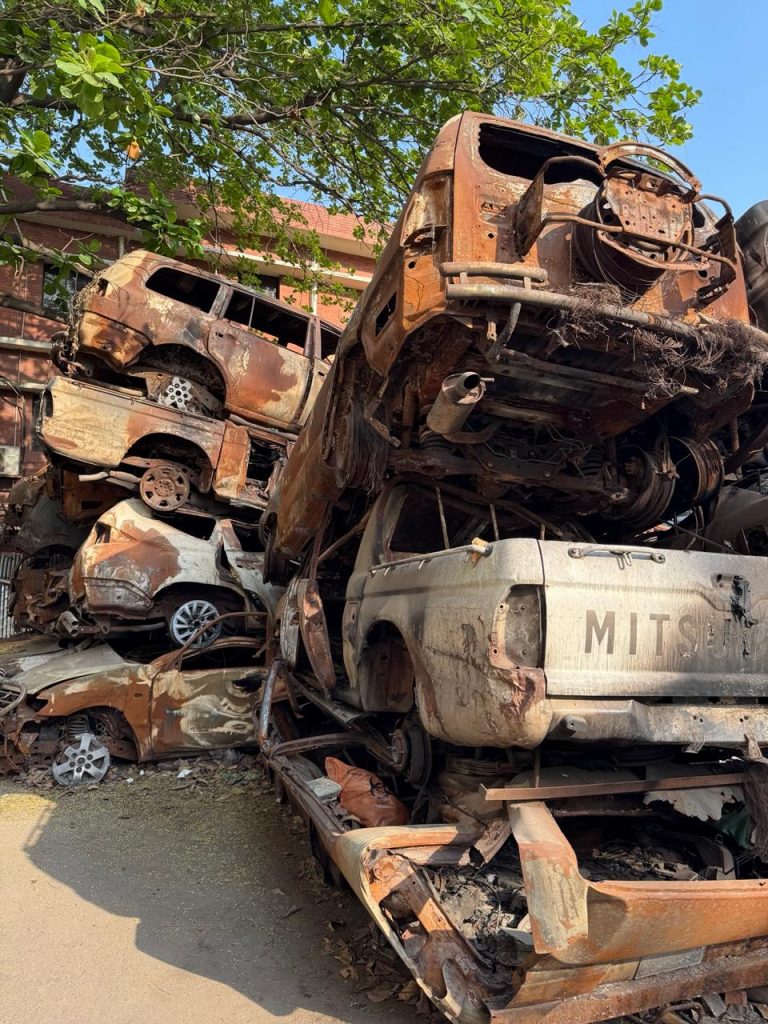
During the unrest of the July ’24 revolution , vehicles stored around it were burned to a crisp. Rows of metal reduced to twisted, blackened shells. Yet somehow, this tiny Jimny remained untouched. Smoke-stained, surrounded by wreckage — but alive.
Where others saw a forgotten relic, Motorwerks saw a rough diamond.
Seeing the Potential
The team at Motorwerks understands what enthusiasts worldwide already know: a JB43 Jimny is not disposable. Its simple mechanical architecture, ladder-frame chassis, and compact proportions make it one of the most capable small 4x4s ever built.
This one deserved another chapter.
But in Bangladesh, restoration is rarely straightforward. Parts are not always a click away. Sourcing takes time, relationships, and patience. This would not be a quick flip. It would be a careful rebuild.
Mechanical First — Heart Before Beauty
Every proper restoration starts with the fundamentals.
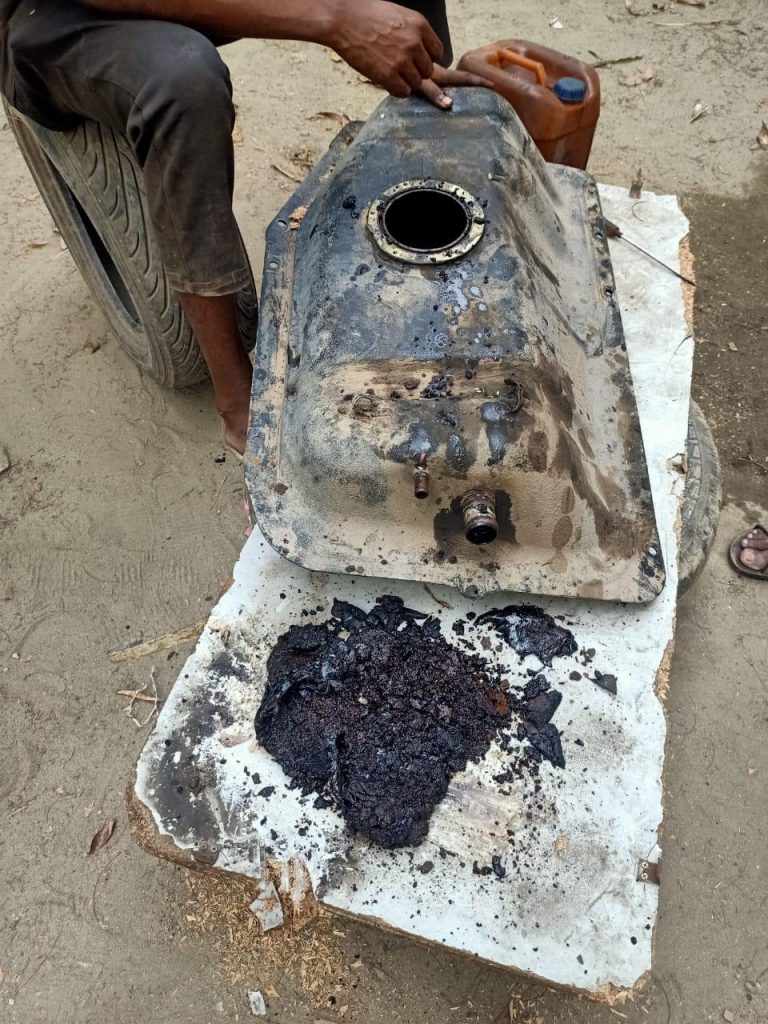
This Jimny came equipped with the rare JB43W 1300cc twin-cam M13A petrol engine which was completely rebuilt — stripped down, inspected, and refreshed with care. Worn internals were replaced, seals and gaskets renewed, tolerances checked and corrected. The goal wasn’t just to make it run. It was to make it dependable again. The fuel tank had accumulated years of debris and contamination — the kind of neglect that quietly compromises reliability.
Once the engine fired up cleanly and settled into a healthy idle, the project had momentum. While the drivetrain was apart, a brand-new clutch was installed to ensure smooth power delivery. The braking system was overhauled with new brakes and lines throughout — essential for a car that would once again see real-world use. Every bushing was replaced, restoring tightness and composure to the chassis.This Jimny would not just look good — it would drive as it was meant to.
Bodywork: OEM+ Done Right
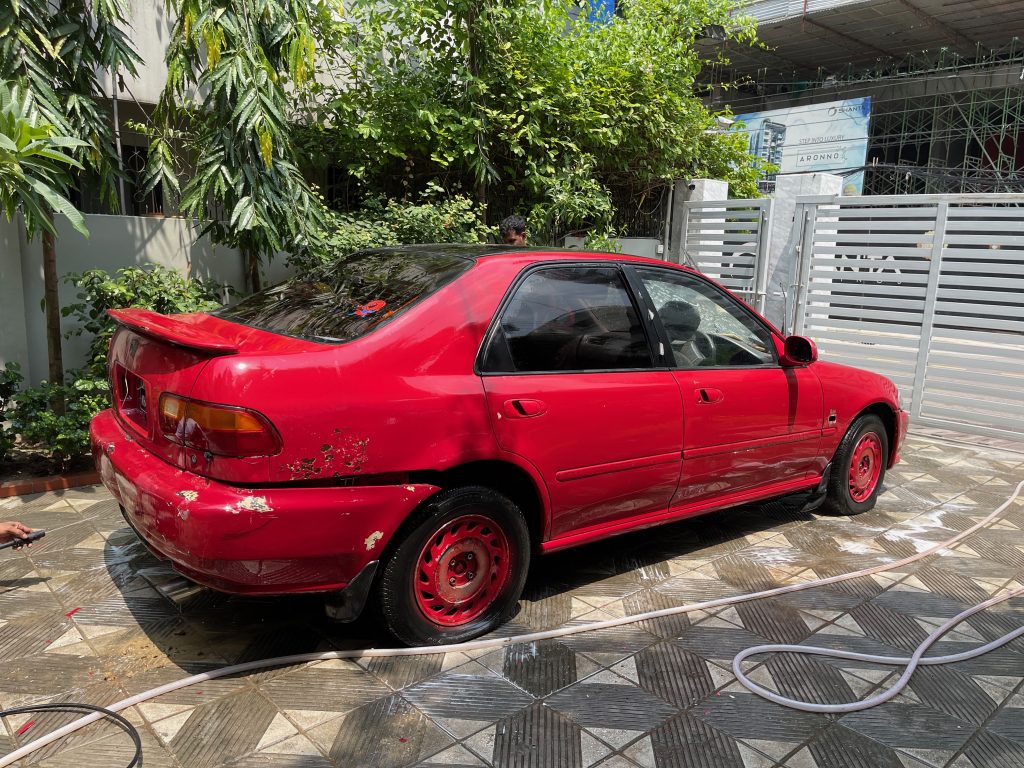
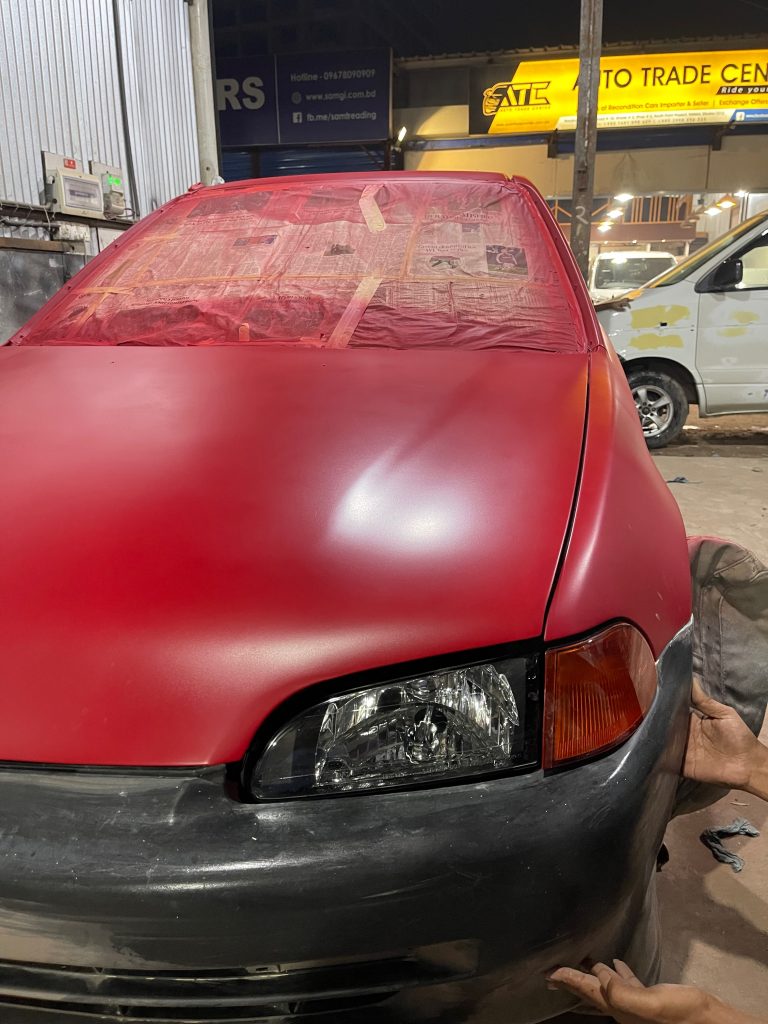
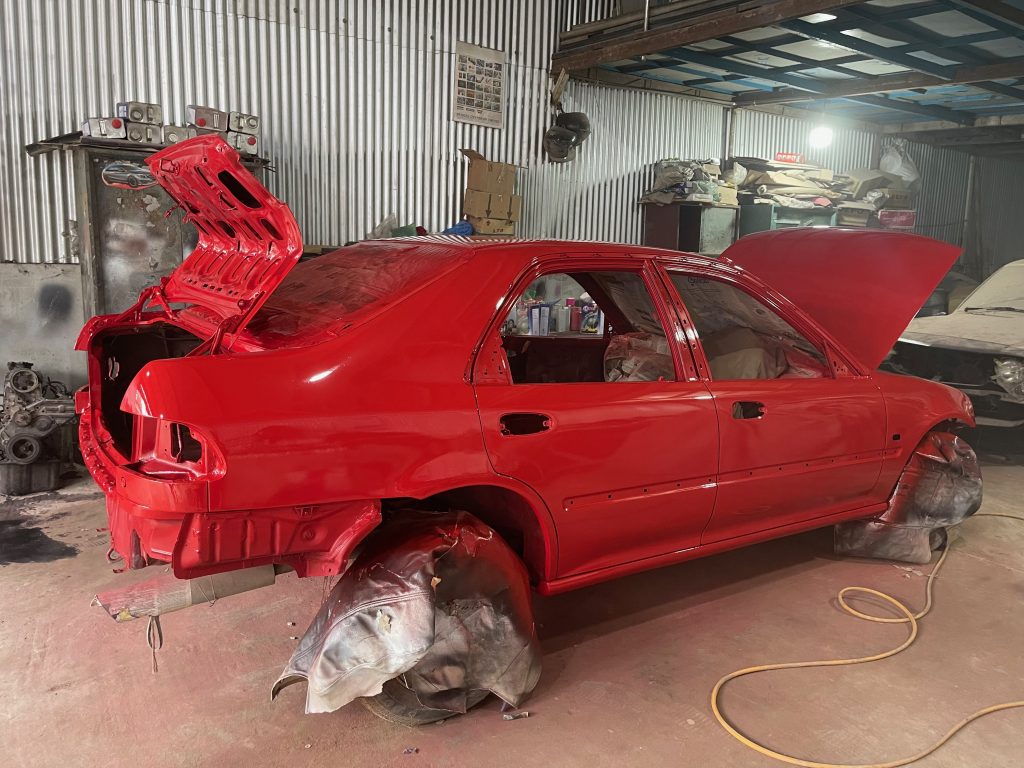
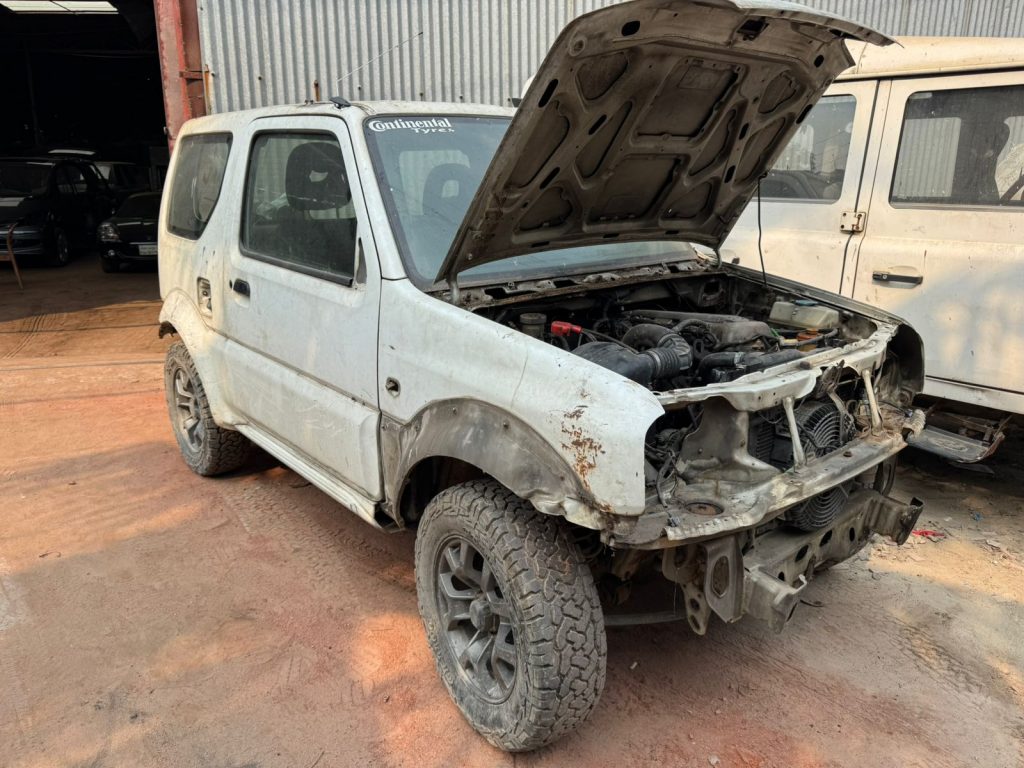
Years of government duty had left their marks. Dents, tired paint, and surface fatigue told its story. The Motorwerks paint team stripped the body back and began the slow process of restoration.
The brief was clear: OEM+.
Not flashy. Not overbuilt. Respect the car’s original character — elevate it subtly.
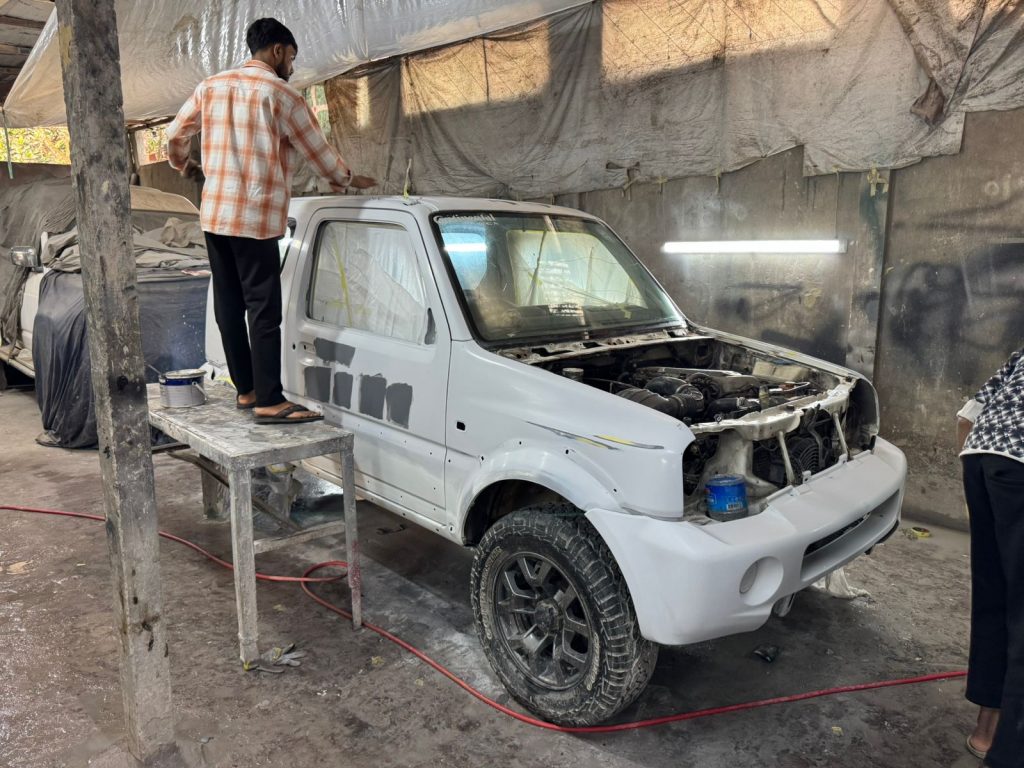
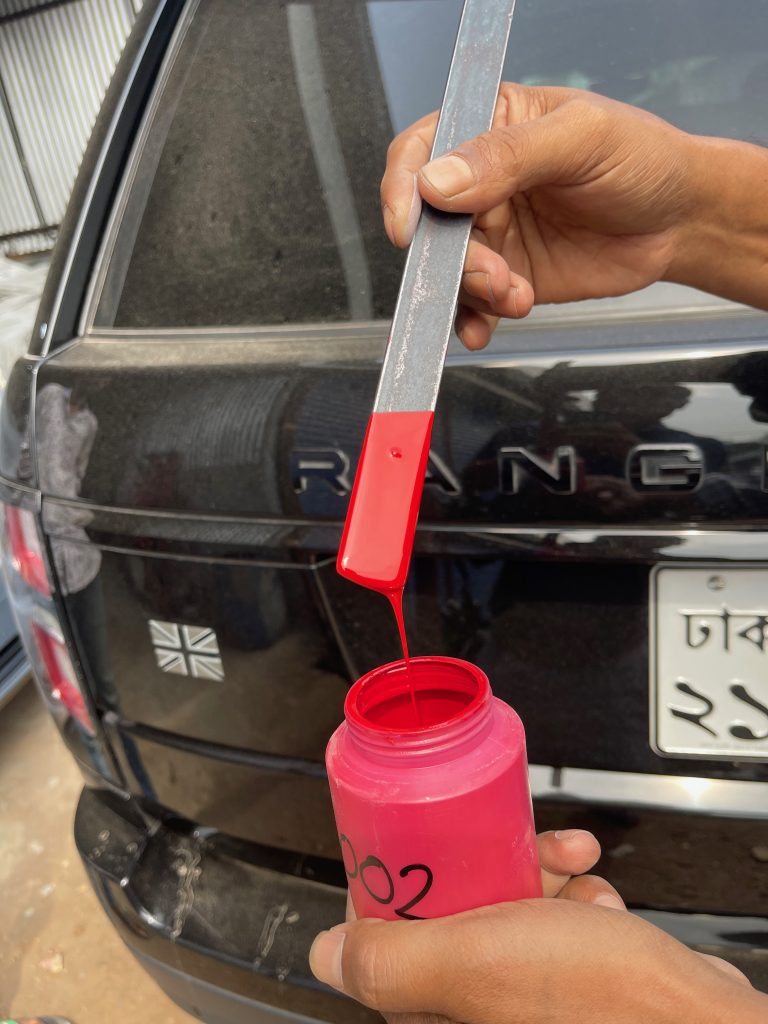
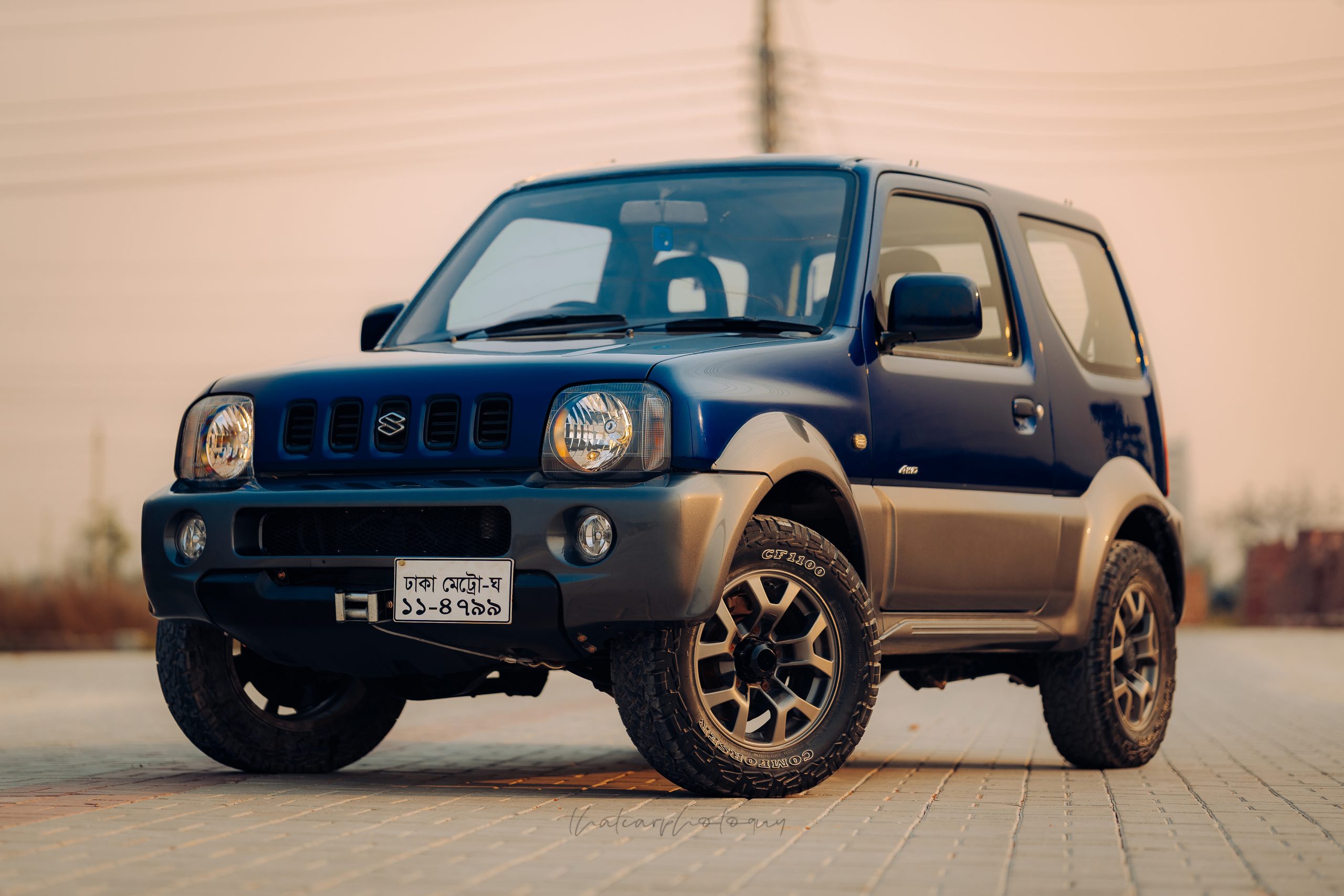
The chosen finish was Gentian Blue, a shade borrowed from Porsche 911 palettes, paired with Toyota’s Magnetic Grey as a contrasting lower tone. The two-tone treatment transformed the car while remaining tasteful.
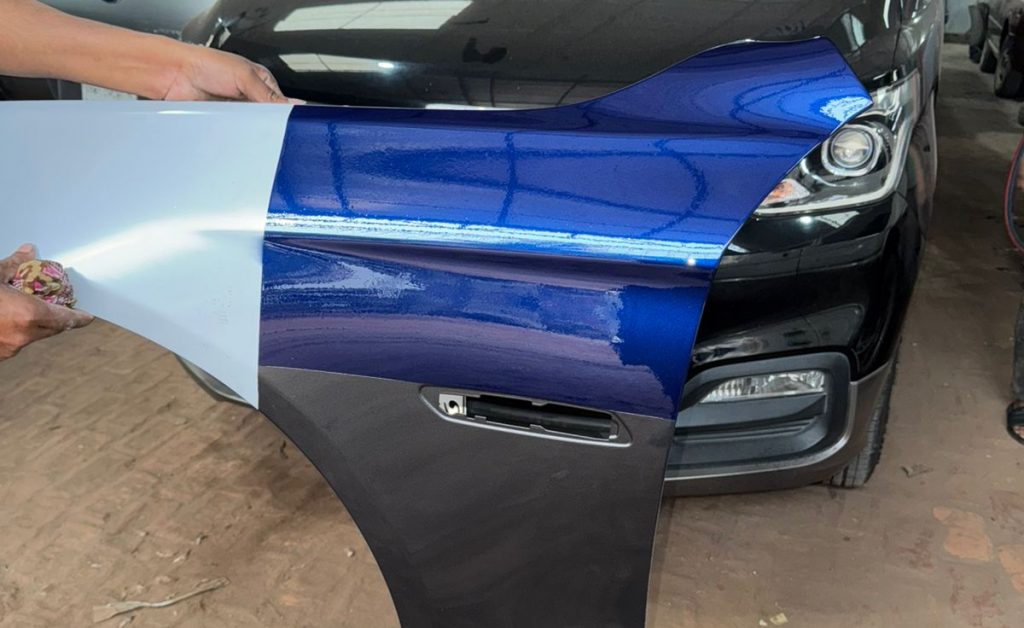
The result is striking but mature. It looks factory — if the factory had better taste.
The Details That Matter
As with any rebuild, the small victories define the journey.
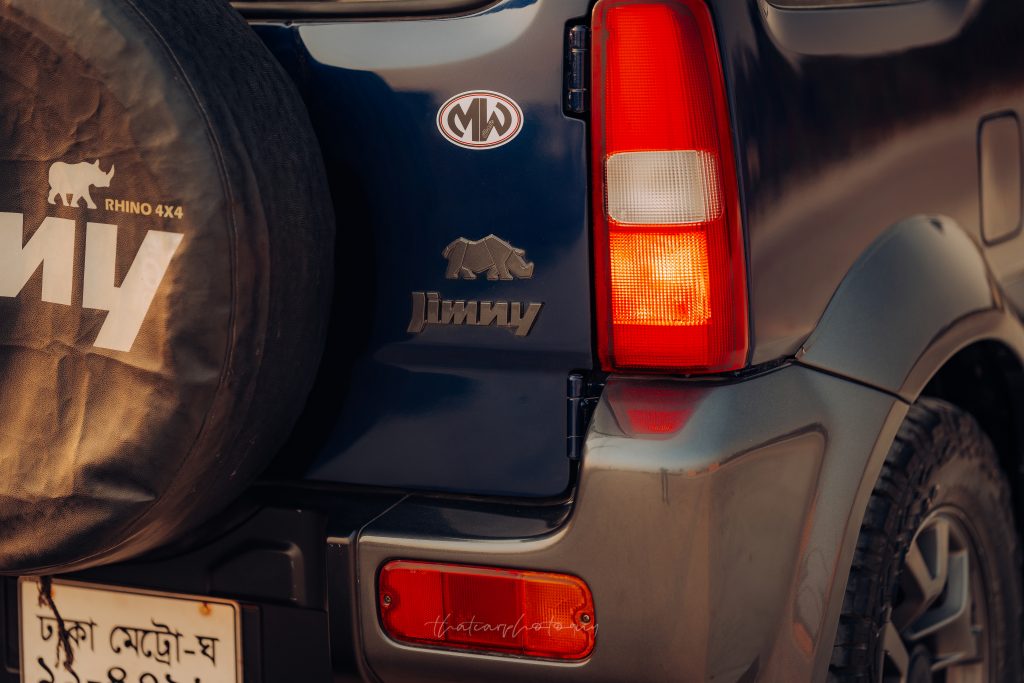
- Brand-new headlamps and tail lamps instantly updated the front and rear ends.
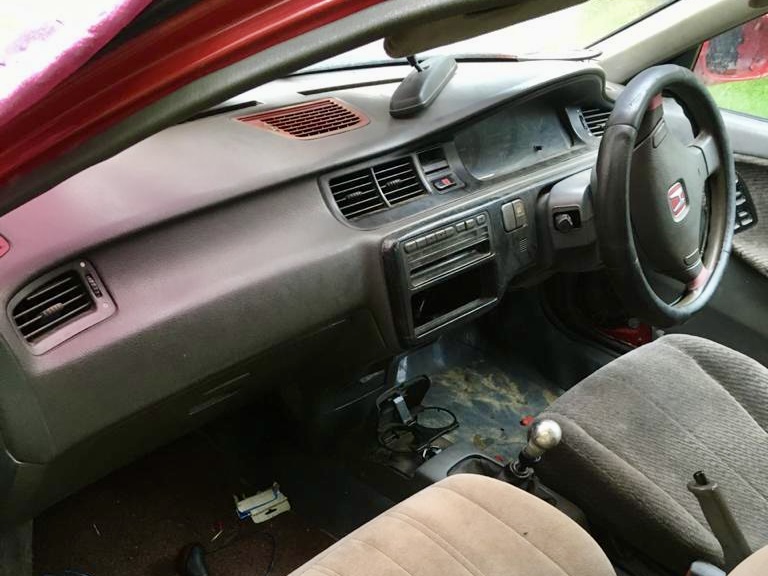
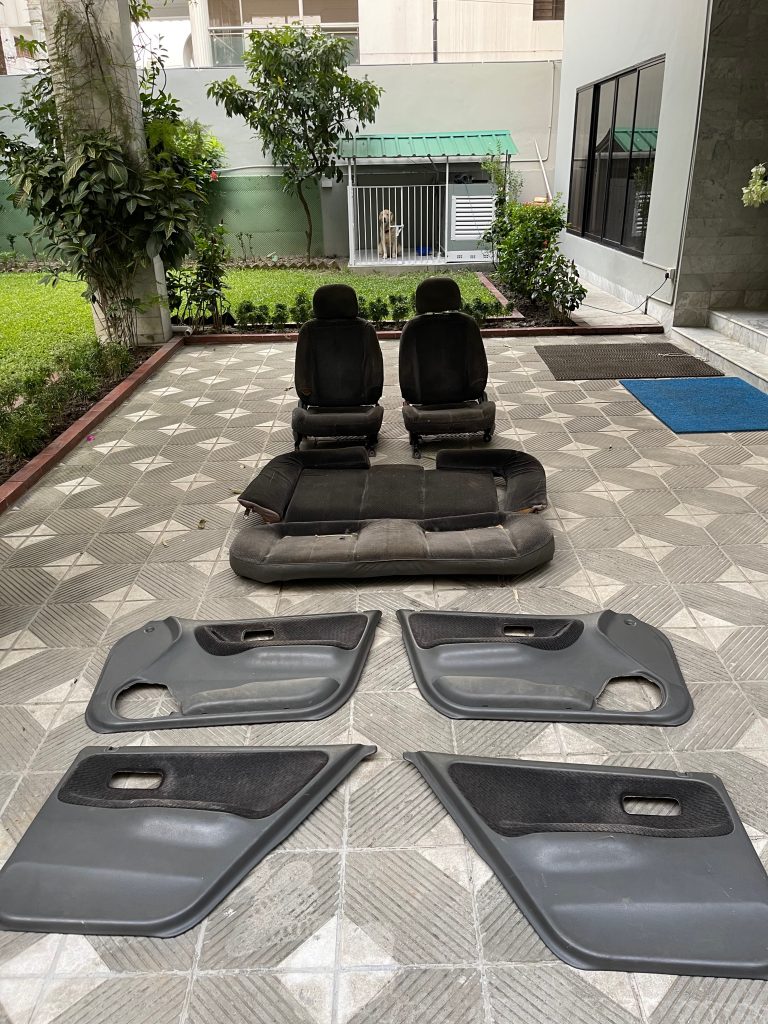
- The seats, thankfully, had been covered for most of the car’s working life — preserving the original upholstery underneath. Once uncovered, they revealed themselves in remarkably good condition.
- The original air-conditioning system remains intact — and still blows ice-cold. A small but meaningful reminder of Suzuki’s durability.
- Wheels and tyres from the latest-generation Jimny — sourced from a friend who upgraded their new car — gave it a wider stance and a more purposeful posture.
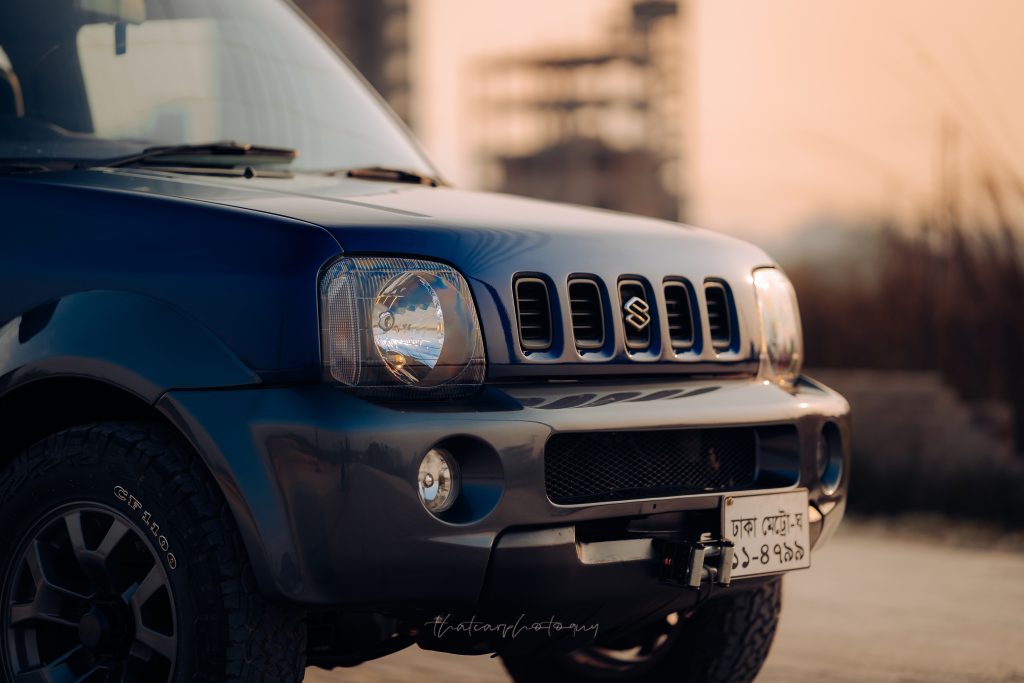
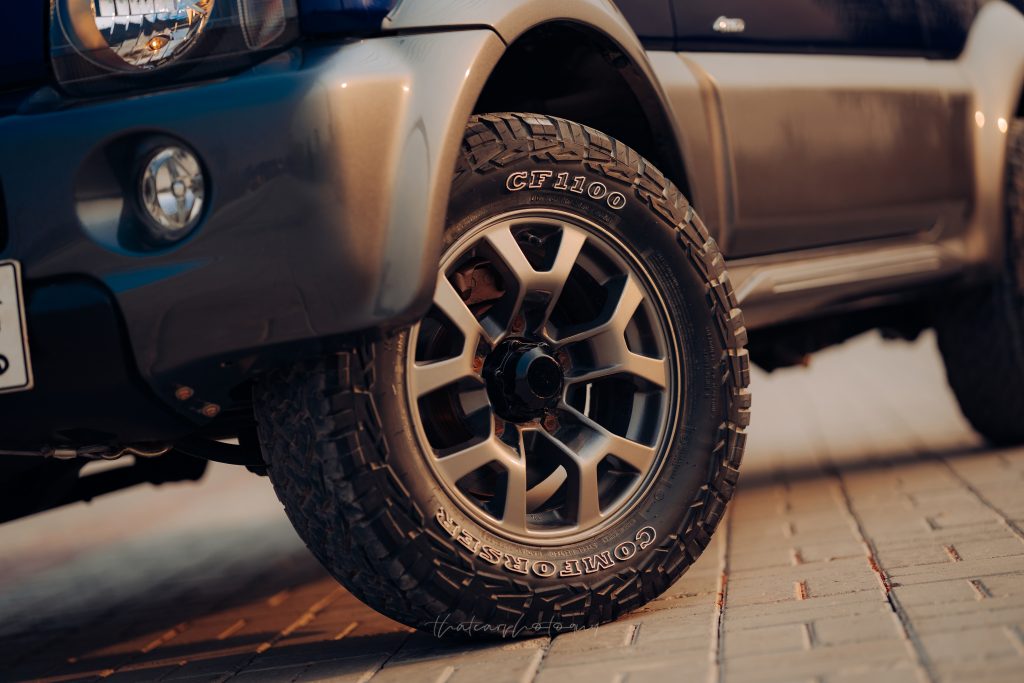
And then, luck intervened.
A winch — found locally at an auto parts store — surfaced at just the right time. In a market where sourcing can take months, this was a lucky find. Fitted neatly up front, it completes the transformation from restored classic to functional explorer.
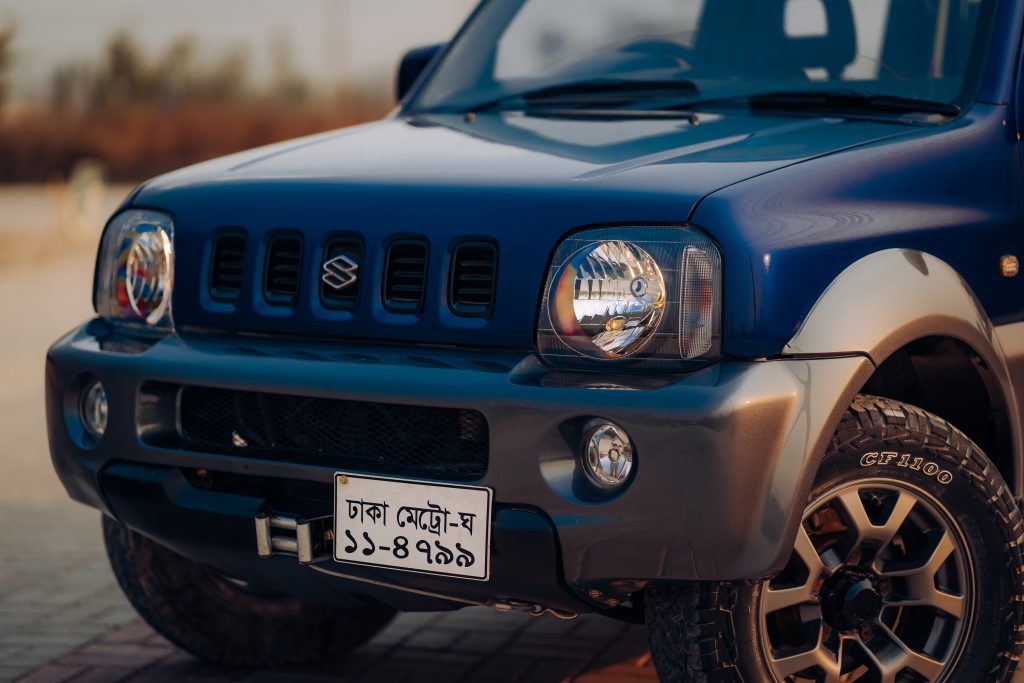
A Patient Rebuild in a Difficult Market
Restoring cars in Bangladesh requires resilience.
Shipping delays. Limited inventory. Improvisation without compromise. Each part sourced feels earned. Each completed stage feels significant.
This Jimny was not restored in haste. It was rebuilt with patience — the kind that only true enthusiasts understand.
More Than a Car
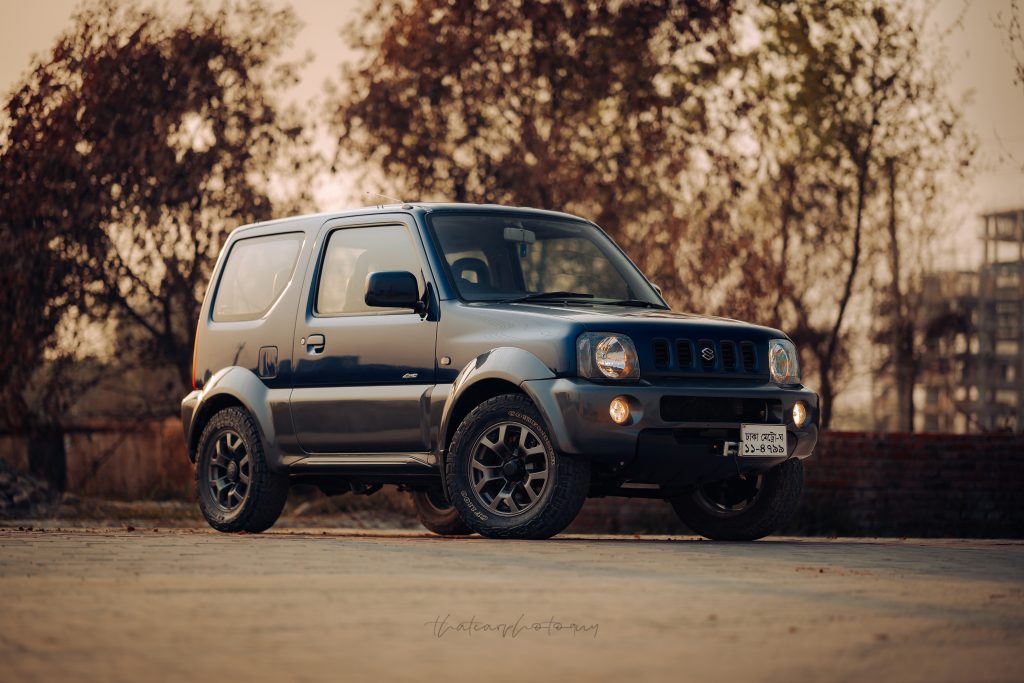
Today, the once-retired Ministry pool car stands renewed. From a life of government service to near destruction, to careful resurrection — its story mirrors the resilience that makes the Jimny beloved worldwide.
Small in size. Immense in character.
Motorwerks didn’t just restore the Jimny. They preserved a piece of mechanical honesty — and proved that even in a challenging environment, tasteful builds are possible.
Sometimes, the smallest 4×4 carries the biggest story.
Technical Specifications
- Model: 2003 Suzuki Jimny JB43W
- Engine: Rare JB43W 1300cc twin-cam M13A petrol engine
- Transmission: 5-speed manual
- Drivetrain: Selectable 4WD
- Differentials: Center differential lock
- Axles: Solid front and rear axles
- Low-range transfer case and centre diff lock